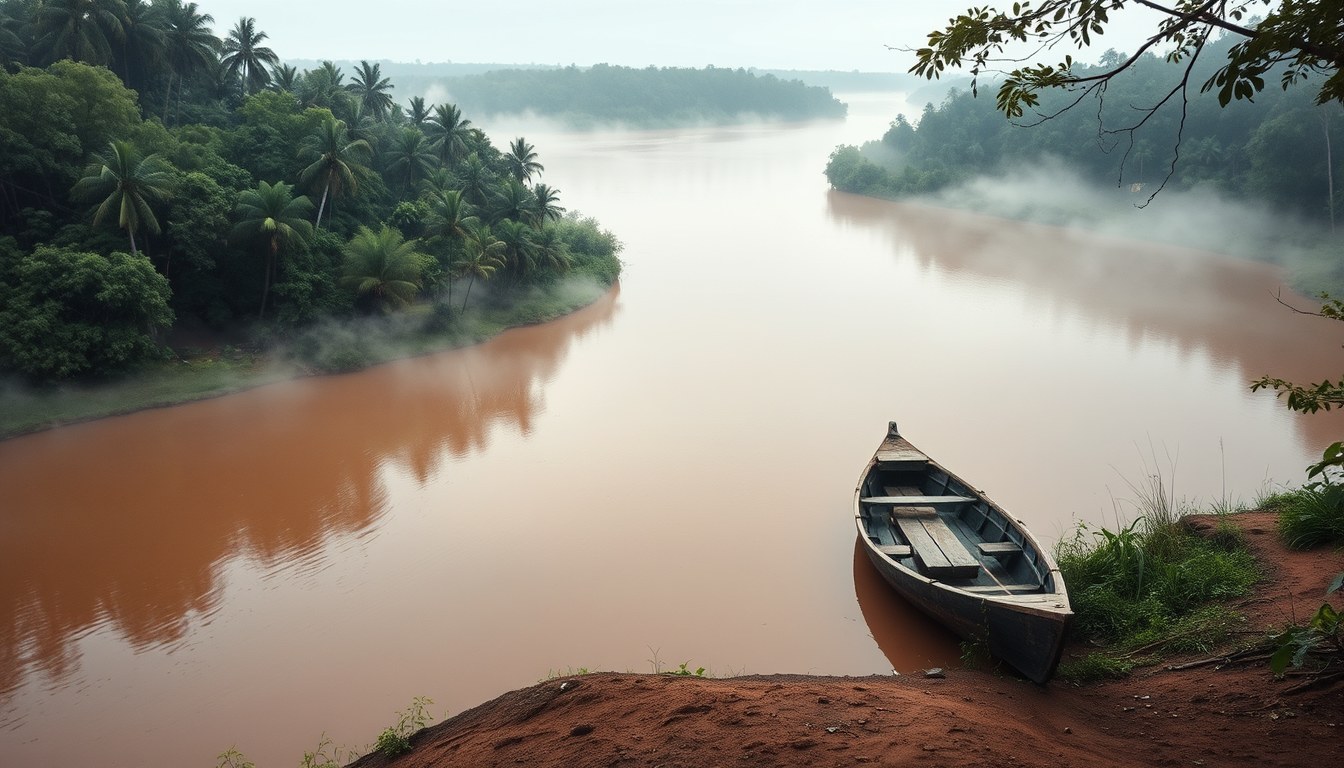
For two months the dead fish in the upper Saramacca River were treated as a local emergency: food parcels, drinking water, samples sent abroad. On 27 August 2026 they became something else. At a press conference at the presidential palace, President Jennifer Simons and the National Environmental Authority (NMA) said that cyanide and heavy metals had been found in the river's water and fish, that the indications pointed to the area around the Moeroekreek, and that, according to the NMA, the contamination started on a concession of Grassalco, the state mining company, or at a company that works or has worked there. The government said it intends to hold Grassalco formally liable for the damage.
That last decision is the one investors should underline. Suriname has long treated the environmental damage of gold mining as a diffuse problem, blamed on unnamed small-scale operators. This time the state has pointed at a named titleholder, and at one of its own.
From die-off to diagnosis
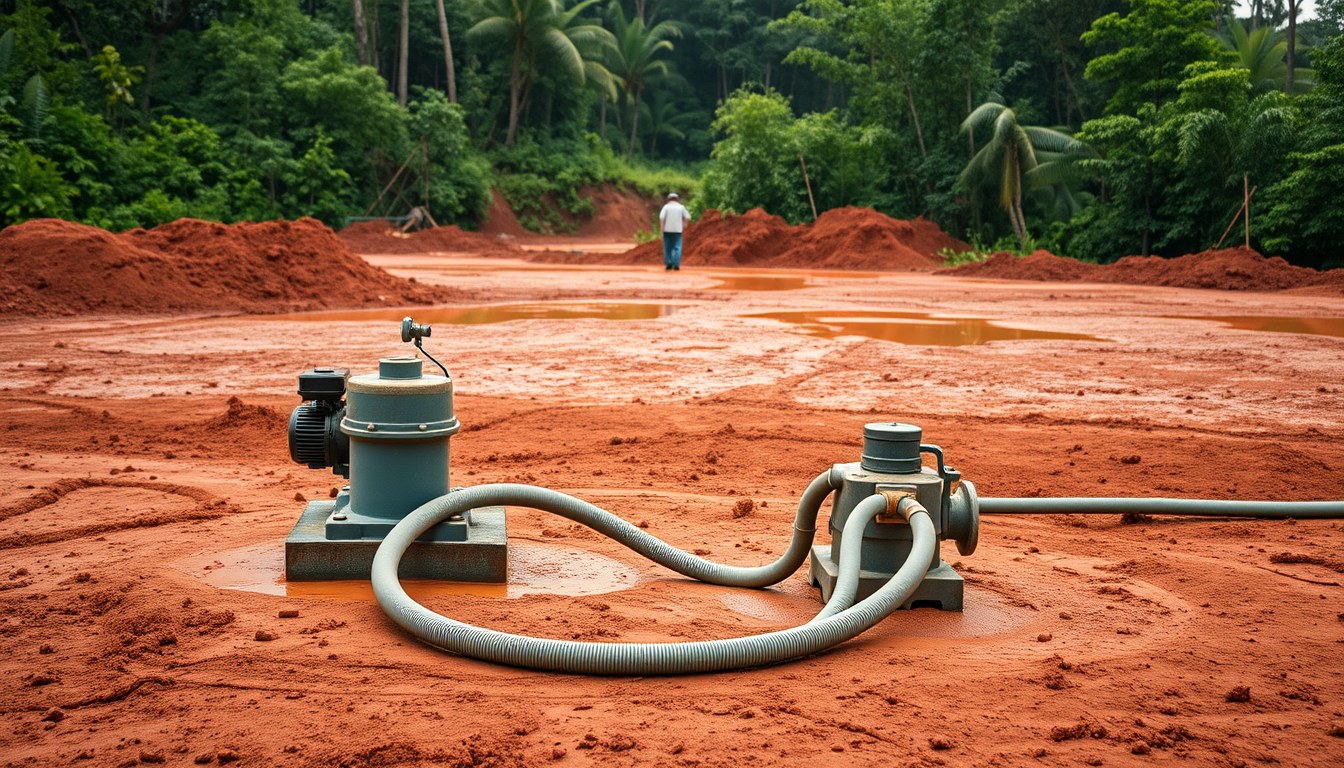
The NMA first warned of a large fish die-off at the Moeroekreek on 26 June. Early results were inconclusive: according to Key News, initial fish samples showed no elevated mercury, lead or cadmium, and early water samples no elevated cyanide or mercury, although iron, aluminium and manganese levels were raised. On 28 July the Environmental Crime Unit, together with the NMA, inspected a heap-leach gold operation at Gunsi as a possible source.
Suriname had to wait for foreign laboratories. Samples went to France, and on 30 July Simons told a krutu in Pikin Saron that it was unacceptable for a mining country to lack a proper laboratory of its own. On 9 August members of the National Assembly demanded the names of the companies active in the area and the concessions they operate under. By 22 August Oil, Gas and Environment minister Patrick Brunings had confirmed heavy metals in the river.
The fuller picture came on 27 August: cyanide in the fish examined, a probable origin around the Moeroekreek, and a Grassalco concession on which, by the government's account, another company had been operating. Grassalco told the government it has already taken measures and moved the operations; the government is awaiting a written explanation from the company, to be followed by formal letters on liability. The investigation has cost the state more than US$50,000, with some analyses done in French Guiana and support from the Pan American Health Organization.
The regulatory bill arrives
The measures announced on 27 August go well beyond one creek:
- Mining around Maripaston, Gunsi and Villa Brazil was temporarily halted to allow more measurements downstream.
- A mixed team of the NMA, police and military will inspect mining areas in the interior; non-compliant companies risk temporary closure.
- New gold concessions are on hold, and existing ones must become more transparent.
- New mining rights and extensions will be critically reviewed, mercury will be phased out and chemicals such as cyanide will be more tightly controlled.
The NMA's own recommendations sketch the compliance burden to come: tighter gold-mining rules with a larger role for environmental impact assessments, control from start-up to waste management, continuous water and soil monitoring, and stricter enforcement against violators. Its director, Vanuessa Gefferie, acknowledged that halting mining in the three high-risk areas would be a major practical challenge.
Simons has also made clear who should pay. In Pikin Saron on 30 July she said the costs of research, emergency aid, environmental damage and possibly compensation could be recovered from the responsible party, and that permit renewals should require investment in cleaner methods. On 27 August her message, as Key News translated it, was blunt: “Just because there is gold there does not mean that I can mine for gold there.”
Why concession holders should worry
Three shifts matter for anyone holding or financing a Surinamese gold title. First, liability appears to be moving toward the concession holder, not just whoever ran the operation. If the government's approach to Grassalco holds, titleholders who let contractors work their ground should expect to answer for their environmental record. Second, the pipeline of new rights is frozen and renewals are being tied to environmental standards, so a concession's value increasingly depends on its compliance record as well as its geology. Third, enforcement in the interior is costly. Large operators already pay for security: on 28 August Newmont renewed a three-year agreement funding police deployment around Merian and Sabajo at US$8,400 a month, while Rosebel reported that a security officer on patrol was wounded by shotgun pellets near Royal Hill on 9 August.
That Grassalco is state-owned does not soften the point; it sharpens it. If the state is willing to pursue its own miner, private concession holders cannot assume political cover. Responsibility has not yet been established in any formal proceeding, and it remains to be clarified which party actually carried out the work on the concession. The harder question is whether a liability claim between two arms of the state will produce real money for villages that, for now, are told not to eat river fish, use river water or swim.
What comes next
On 28 August Simons and the NMA met traditional leaders from Pikin Saron, Bigi Poika, Tibiti, Harlem, Santigron and nearby areas. A core group of the affected villages, the Para district commissioner's office and the ministries of agriculture and health will map the damage, and the agriculture ministry is to help set up poultry and fish farming as alternative sources of food and income. The precautionary advice stays in place until the water and fish are declared safe.
For the gold sector, the reckoning has only begun. Concession holders who cannot document their chemical use, waste handling and contractors would be wise to prepare for closer scrutiny.
Sources & further reading
- Government of Suriname: Regering vat resultaten onderzoek verontreiniging Saramaccarivier ernstig op (27 Aug 2026)
- Key News: Cyanide found in live fish; Grassalco held liable (27 Aug 2026)
- Key News: NMA wil goudwinning tijdelijk stilleggen na vervuiling Saramaccarivier (28 Aug 2026)
- Key News: Saramacca River pollution: government to assist affected communities (30 Aug 2026)
- Key News: Saramaccarivier vervuild met zware metalen (22 Aug 2026)
- Key News: DNA eist namen bedrijven na vissterfte Saramaccarivier (9 Aug 2026)
- Key News: President belooft laboratorium en compensatie (1 Aug 2026)
- Key News: ECU onderzoekt goudoperatie bij Gunsi (30 Jul 2026)
- Rosebel Gold Mines: RGM condemns shooting near Royal Hill (12 Aug 2026)
- Government of Suriname: Minister Monorath tekent vernieuwde MOU met Newmont (28 Aug 2026)
- One Year of Simons: The Honeymoon Is Over