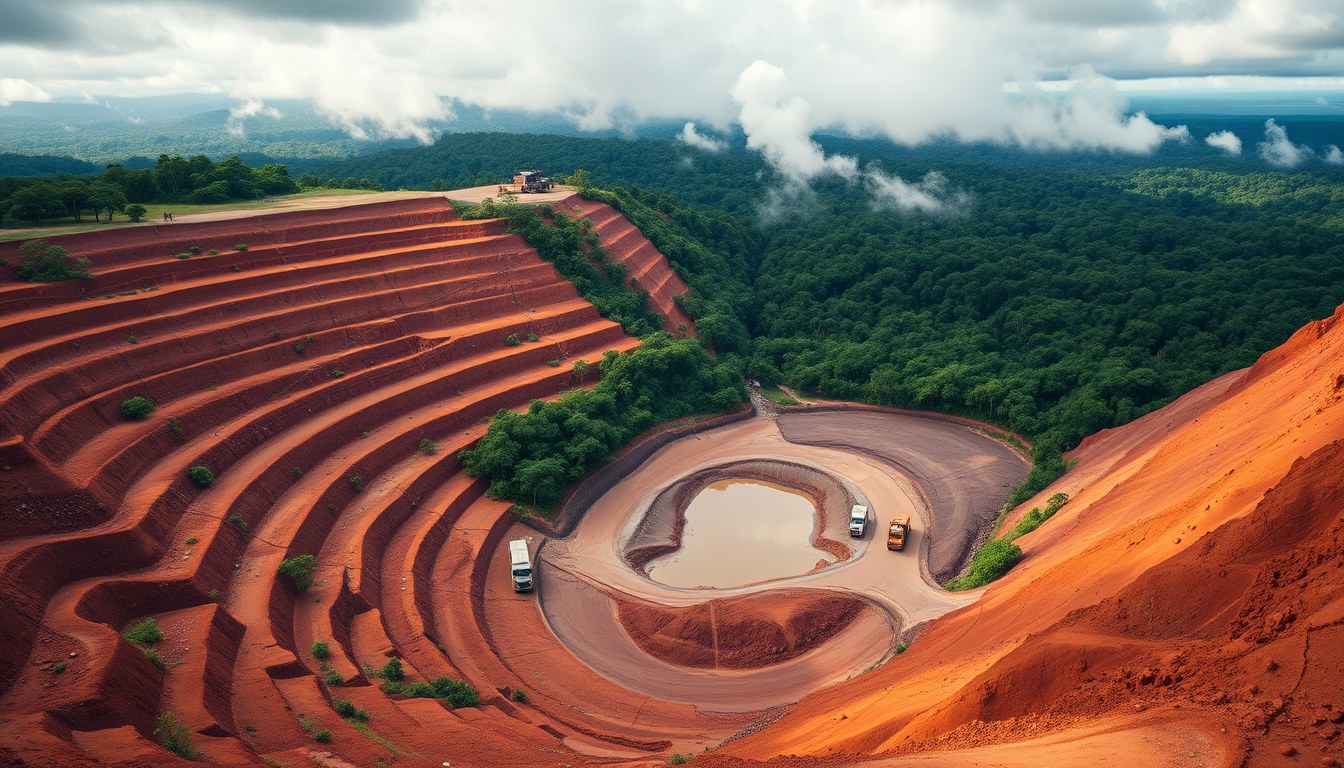
Ten years ago Suriname bet that a foreign major could build a modern gold mine in its eastern interior and leave more behind than a hole in the ground. On 2 October Newmont marked a decade of production at Merian, which began in October 2016 and passed its four-millionth ounce this year, with President Jennifer Simons in attendance. The company's headline: of roughly US$6.6 billion in revenue, US$4.74 billion, an average of 73%, stayed in Suriname, according to the official government report of the ceremony. Suriname Herald adds that the share was 75% in 2025 and that Newmont aims to raise it further.
Less than three weeks later, on 20 October, Staatsolie and Zijin Rosebel briefed the President on an expansion that the companies say needs about 3,600 additional long-term jobs by 2031. Taken together, the two events pose the question that matters for the next decade: what did industrial gold actually deliver, and is the country ready to absorb a second wave?
Unpacking the 73%
The figure is Newmont's own, not the product of an independent audit, and it measures money spent in the country rather than money received by the state. Country manager Shirley Sowma-Sumter broke it down, as reported by The Rio Times and Suriname Herald:
- Suppliers and contractors: US$2.7 billion, roughly 41% of revenue.
- The state: US$1.54 billion, about 23%, made up of the 6% royalty on revenue, income and wage taxes, and proceeds paid to Staatsolie, which holds 25% of Merian to Newmont's 75%. Staatsolie's net proceeds came to US$620 million.
- Wages: US$504 million, under 8%.
The remaining US$1.86 billion or so left the country; Sowma-Sumter said part of it pays for goods bought abroad and part is Newmont's profit, without giving figures for either. The supplier line is the largest and the most elastic: annual local spending rose from US$160 million in 2016 to US$345 million in 2025, according to the same reports, and nearly 97% of the workforce is Surinamese. That is a respectable record. But it is the company's own record, and the procurement figure does not show how much of each contract's value was itself imported by a local intermediary. The state's direct take, at under a quarter of revenue, is the number taxpayers should watch most closely.
Rosebel's numbers tell a similar story
Zijin Rosebel's 2025 results offer a useful cross-check. Output rose 5.46% to 306,535 ounces, and the company put its total contribution at US$630 million: US$363 million in government payments and US$267 million in employee pay and domestic procurement. Local suppliers took 54.13% of procurement spending, the first year domestic purchases exceeded imports, and Surinamese nationals made up 94.56% of the workforce. Two large operators, broadly similar stories: high local employment, and local procurement that is rising but at Rosebel has only just crossed the halfway mark.
The next wave: plants, power and people
The expansion presented to President Simons comprises a new processing plant at Mayo, new mining and processing facilities at Saramacca and additional power infrastructure. On completion, combined ore processing would be about 18 million tonnes a year and gold output more than 12 tonnes, or roughly 386,000 troy ounces. Saramacca is a joint venture in which Rosebel operates and takes 70% of production and Staatsolie 30%, The Rio Times notes; the government's account of the meeting stresses that Staatsolie's participation means the state earns more from the gold sector. Of the 3,600 new long-term jobs, Rosebel says about 2,911 are meant for Surinamese workers, and six projects worth about US$30 million combined, from accommodation and warehouses to site preparation, are reserved for local contractors.
Some of the arithmetic is still loose. In July Rosebel presented shareholders with a three-year investment programme of about US$1.25 billion, including a 90-megawatt power plant, and said its projects would create more than 2,000 direct and indirect jobs. As The Rio Times points out, the companies have not explained how that figure relates to the 3,600 now cited, nor set out a hiring timetable. The expansion is expected to be operating in 2027, according to both the government and the companies, which leaves little time to train the workforce it requires.
Merian, too, has room to grow. Interim general manager Clinton Van der Westhuizen told The Rio Times that output could rise from 300,000-350,000 ounces a year towards 500,000, but that this would need permits, access to land and a stable investment climate. Suriname Herald reports that this option is still under study and is not a commitment, and that Newmont expects about 300,000 ounces in 2026.
Skills and stability are the binding constraints
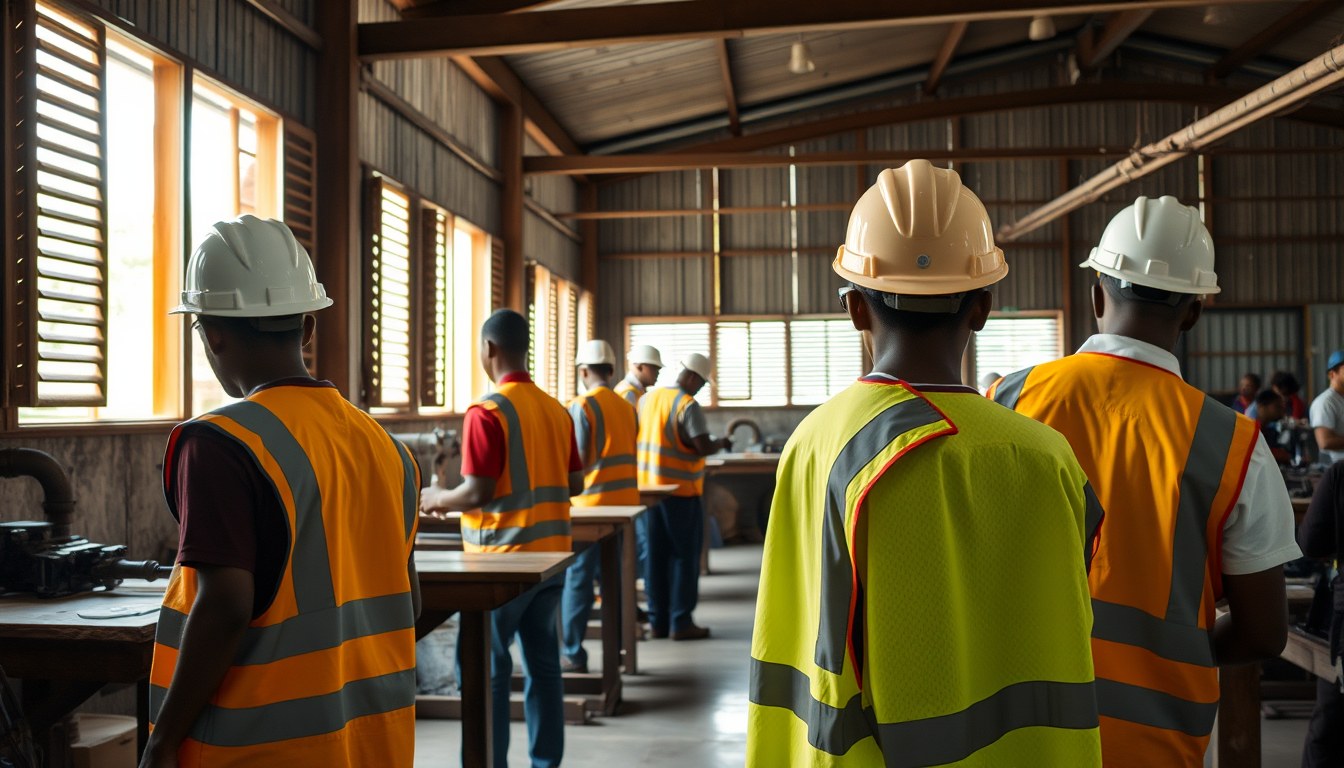
Rosebel's community relations and development manager Jerry Finisie, speaking for both companies, told the President that recruiting enough qualified workers is difficult; the problem, as he framed it, is a skills mismatch rather than a lack of job seekers. Simons expressed openness to solutions through vocational institutions such as NATIN and short courses. The two accounts of the meeting differ on foreign labour: Rosebel's release says temporary employment of overseas workers during construction and commissioning was discussed, while the government's report quotes Finisie as saying the aim is not to bring in people from abroad to do the work. Meanwhile the informal side of the sector remains unresolved: on 7 October the government installed two teams to bring order to artisanal gold mining, with mercury use, pollution and weak state revenue on the agenda and a national gold authority in preparation.
The lesson of Merian's first decade is that industrial gold can keep a majority of its revenue onshore, but mostly through procurement and payroll rather than the treasury. If the next wave is to do better, Suriname needs trained technicians ready by 2027, procurement data that can be independently verified, and predictable rules on permits and land. Simons said at Merian that local communities must always benefit from what happens around them. The expansion now on the table is the test of that principle.
Sources & further reading
- Government of Suriname: President Simons erkent bijdrage Newmont bij 10 jaar Merian-mijn (Oct 2026)
- Suriname Herald: Newmont: US$ 4,74 miljard bleef in Suriname na tien jaar goudproductie bij Merian (3 Oct 2026)
- The Rio Times: Suriname Kept US$4.74 Billion From Newmont Merian Mine (4 Oct 2026)
- Government of Suriname: Staatsolie en Zijin Rosebel Gold Mines maken president deelgenoot van expansieplan (Oct 2026)
- The Rio Times: Suriname gold expansion needs 3,600 workers (21 Oct 2026)
- Rosebel Gold Mines: Rosebel Presents Expansion Plans to President Simons (24 Oct 2026)
- Rosebel Gold Mines: 2025 Output Increases as Contributions Reach US$630 Million (Jul 2026)
- Key News: Twee teams geïnstalleerd voor ordening artisanale goudsector (9 Oct 2026)
- Local Content 2026: The Real Test Begins Now