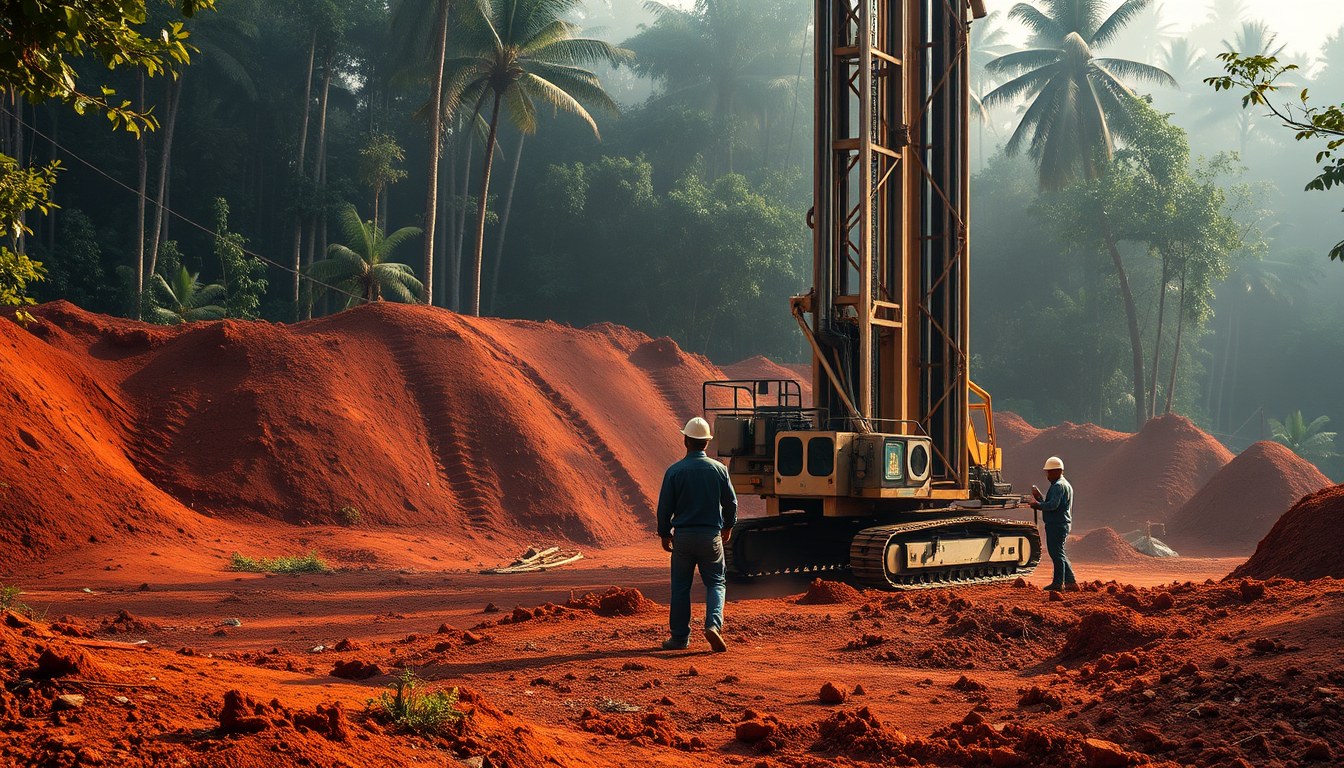
Three gold explorers have given investors and Paramaribo's mining suppliers something to read this month. On 25 November Founders Metals, listed on Toronto's venture exchange, reported 15.0 metres grading 23.97 grams of gold per tonne at its Antino project in the south-east. Nine days earlier, Sranan Gold announced a new gold showing at Lawatino. And Australia's Critical Resources hired a geologist ahead of its first sampling near the Rosebel mine.
The announcements may sound alike, but they describe very different stages of work: deep diamond drilling, surface trenching and a project where the company has not yet taken a sample. None of the announcements discussed here reports a mineral reserve or a new resource estimate. For anyone weighing what this means for the economy, that distinction matters more than any single grade.
Antino goes deeper
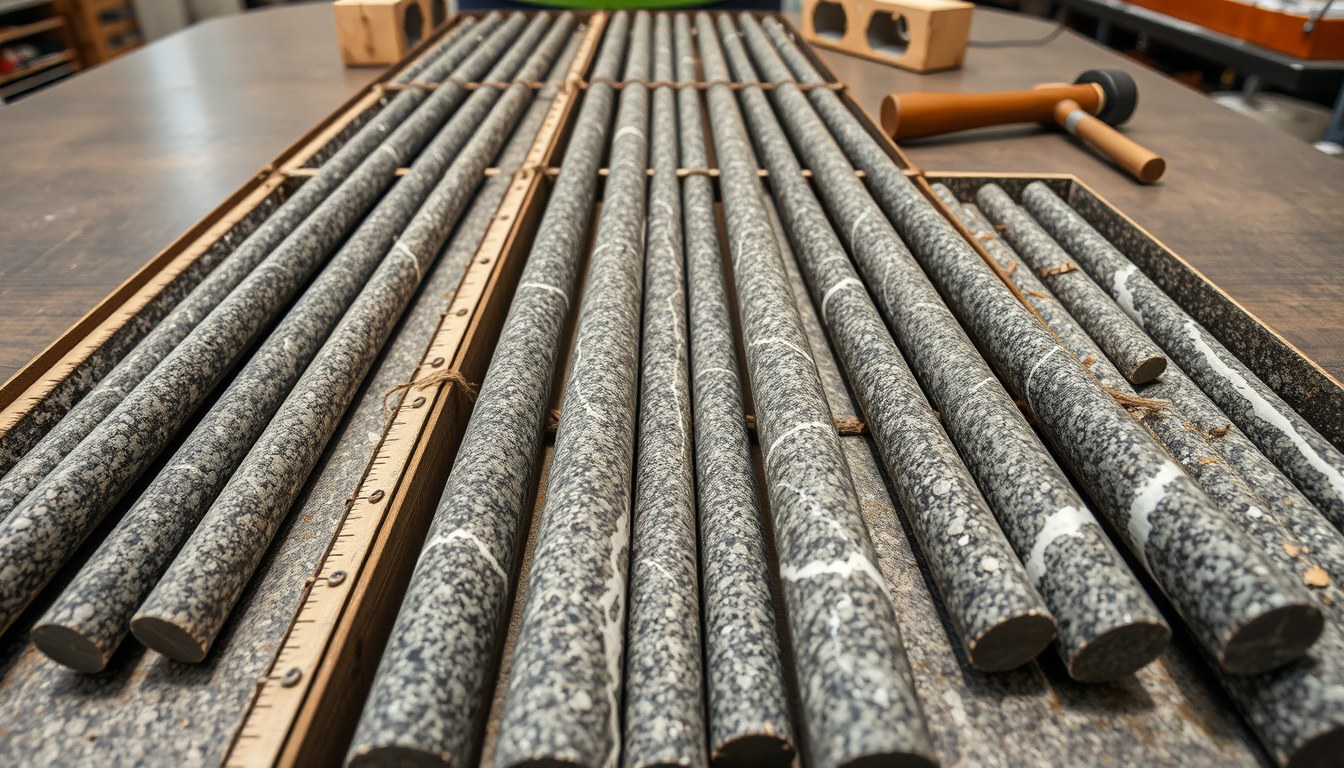
The headline hole, FR298, struck its interval from 504 metres downhole, about 400 metres below surface. It lies roughly 70 metres down-dip from an earlier hole that returned 12.21 grams per tonne over 9 metres, and the company says the so-called Froyo Zone remains open at depth. These are downhole lengths; Founders estimates true width at about 75–85% of them. Grades are reported uncapped, meaning unusually high assays have not been trimmed.
The same release is a useful reminder that drilling results are uneven. Other holes returned 11 metres at 10.57 grams and 9 metres at 8.13 grams, but also 23 metres at a more modest 1.80 grams. A number of holes in the results table, among them FR296, FR297 and FR299, had no significant assays. Results are still outstanding for deep holes drilled since FR298, among them FR308, which, at 884 metres, is the deepest at Upper Antino to date.
The result follows an October release reporting 54 metres at 8.45 grams from 303 metres downhole, with true width estimated at about 75%.
Money buys metres
Founders is operating on a much larger scale than the other two. Its website describes a fully funded 70,000-metre drill programme using a company-owned fleet, on ground it says it owns 100% and royalty-free. It also says South Africa's Gold Fields has invested about US$100 million in the company and holds 19.9%. That includes an investment of about C$77 million announced in August and completed in September, when Founders also took full ownership of Antino. The land package covers 102,360 hectares.
Scale and cash do not yet make a mine. Reporting on a September investor presentation, Investing.com said Lower Antino was moving towards an initial resource definition and that the company still needed more drilling before its many targets become defined resources. Even a resource would be only a step: a reserve requires showing that the material can be mined economically.
Lawatino: visible gold, no grade yet
Sranan's 16 November news is much earlier-stage. The newly reported RB Zone sits about 300 metres north-east of the 101 Zone, within the 18,468-hectare Lawatino project. Crews panned numerous visible gold grains from deeply weathered material and observed sheeted quartz veining 2 to 3 metres wide.
The company is explicit that panning cannot be used to estimate grade, width or continuity. Samples were on their way to the Filab laboratory in Paramaribo, with assays expected in about four to five weeks, while excavator trenching continued. Elsewhere on the property, Sranan has reported a best channel sample of 20.89 grams per tonne over 3 metres at the 101 Zone, and grab samples there of up to 101.5 grams per tonne. Grab samples are selective and may not represent average grades.
An initial drill programme at Lawatino is planned for 2027. Until holes are drilled, what lies below remains untested by the company. Sranan's other project, Tapanahony, is further along: the company has said it targets at least 12,500 metres of drilling there in 2026.
Gadu Manda: paperwork before samples
Critical Resources is at the starting line. In October it secured exclusivity to pursue 90% of Gadu Manda, an exploration right of about 29 square kilometres in Brokopondo, some 4 kilometres west of the open pits at Zijin Mining's Rosebel. The terms include US$200,000 in staged cash, 2.5 million shares and at least US$200,000 of exploration spending within two years of completion.
The deal is not done. It depends on due diligence, prior written approval from the Minister of Natural Resources, extension of the exploration right (or confirmation that it can be extended) and resolution of any third-party mining on the ground. The exclusivity period is 60 days, extendable once by up to 30.
The company has since engaged Mauricio Felmer, who helped build the geological and structural model of Guyana's Oko West deposit, to lead its Suriname geology. Hand-auger soil sampling is planned for December, with follow-up work from January. Being next to a producing mine does not mean Gadu Manda hosts similar mineralisation, as the company itself cautions.
What Suriname should watch
For local businesses, exploration is spending that arrives before any royalty does. Both Founders and Sranan name Filab in Paramaribo as an assay laboratory, and Critical Resources plans to use local contractors for its December sampling. Drilling camps, transport, earthmoving and technical services are the nearer-term opportunity, though the announcements cited here do not quantify local spending.
For policymakers, the questions are more administrative. Gadu Manda shows how a transaction can hinge on ministerial consent, the life of an exploration right and who else is already digging on it. Predictable, timely decisions on such matters are likely to influence whether foreign risk capital stays.
The next tests are close: Sranan's RB Zone assays, Founders' pending deep holes and Critical Resources' first soil samples. Each could strengthen the case or weaken it. This article is not investment advice, and exploration results are not a promise of a mine, jobs or state revenue.
Sources & further reading
- Founders Metals: Upper Antino results, 25 November 2026
- Founders Metals: Froyo Zone results, 7 October 2026
- Founders Metals: company website
- Mining.com.au: Founders consolidates Antino as Gold Fields lifts stake to 19.9%
- Investing.com: Founders Metals at Mining Forum Americas 2026
- Sranan Gold release, 16 November 2026 (Mining Stock Education)
- Sranan Gold: company website
- Discovery Alert: Critical Resources' Gadu Manda terms
- Discovery Alert: Critical Resources' Suriname geologist and work plan
- wimpel.online: Founders Metals, the junior building Suriname's next gold district
- wimpel.online: Gold at $4,000 brings Suriname's junior explorers out of the bush