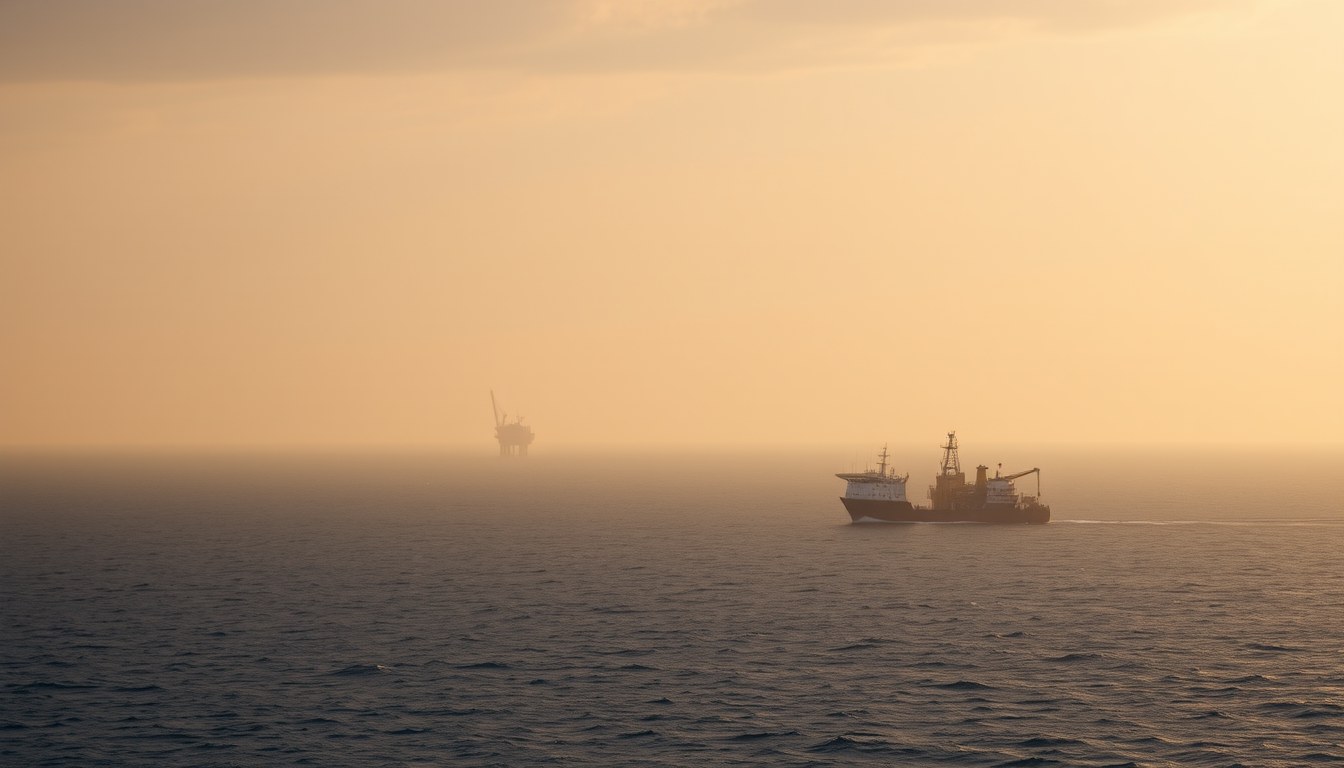
Staatsolie has put a number on Suriname's first offshore gas project. According to the state oil company, the KrakaWi development in Block 52, operated by PETRONAS, should bring the State of Suriname about US$7 billion over 25 years, an average of roughly US$280 million a year, Starnieuws reported on 27 November. We covered the final investment decision in our news report on the KrakaWi FID, and the operator in our PETRONAS profile. This piece asks a narrower question: what sits behind the US$7 billion, and how far can Suriname plan on it?
The official numbers
The figures below come from Staatsolie, the government and the project partners as reported this week. Our own interpretation follows in later sections.
- State income: about US$7 billion over 25 years, averaging around US$280 million a year. Staatsolie says actual income depends on international gas prices, production and the agreed fiscal terms (Starnieuws).
- Investment: US$1.6 billion initially. PETRONAS holds 80 percent (US$1.28 billion) and the Surinamese side 20 percent (US$320 million). That 20 percent stake is held by Paradise Oil Company, a Staatsolie subsidiary (Staatsolie). Staatsolie director Annand Jagesar says financing for the Surinamese share is in place.
- Output: four production wells in the Sloanea field, linked by subsea infrastructure to a floating LNG unit with a capacity of about 1.5 million tonnes a year. Production of 270 million standard cubic feet a day is expected from mid-2030, with about 24 LNG cargoes a year (Starnieuws).
- Schedule: Minister of Oil, Gas and Environment Patrick Brunings told Radio ABC that the wells are planned to be drilled between 2027 and 2029, with first gas targeted for 2030, an aim rather than a fixed date (Suriname Herald). A 2030 first-gas target was already part of Staatsolie's November 2025 announcement of the field's commerciality.
How the money reaches the State
No breakdown of the US$7 billion by channel has appeared in the public reporting we reviewed. Two channels are visible. The first is the State's 20 percent participation, which earns a share of project cash flow and dividends. The second is taxation. Engineer Dharmvir Mungra, writing in a Starnieuws opinion piece, describes the terms, which he attributes to Staatsolie, as a tax exemption for the investor of up to ten years, which ends earlier once the investor has earned back twice its investment. Those terms have not been published in full.
Royalties and a state share of profit are the other usual levers in Suriname's production-sharing model. Staatsolie's own explanation of the Block 58 contract lists a 6.25 percent royalty, a profit-oil split based on an R-factor formula and a 36 percent income tax. Whether, and on what terms, comparable levers apply to Block 52 gas has not been disclosed in the reporting we reviewed. Readers should therefore not assume that KrakaWi mirrors GranMorgu's fiscal structure.
Timing: a back-loaded US$280 million
wimpel.online analysis. The US$280 million is an average, and averages hide timing. No meaningful revenue arrives before first gas, targeted for 2030. If the tax exemption works as described, the State's early take would rest mainly on its 20 percent stake, which would first have to recover the US$320 million Surinamese contribution. Tax revenue only starts once the exemption expires. On Mungra's simplified reading of the terms, that could be after roughly five to six years at average gas prices, three to four years at high prices (a payback period he attributes to Staatsolie itself), or close to the full ten years at low prices. On that reading, the money is likely to be weighted towards the second half of the 2030s and beyond, not towards the budgets of the early 2030s.
Scale: GranMorgu and the state budget
wimpel.online analysis. KrakaWi is a supplement, not a second GranMorgu. TotalEnergies and APA took the investment decision on their Block 58 oil project in October 2024 at a cost of about US$10.5 billion (Journal of Petroleum Technology). At US$1.6 billion, KrakaWi costs about 15 percent of that. A like-for-like comparison of state income is not yet possible, because no comparable official lifetime revenue figure for GranMorgu has been confirmed in the sources we reviewed.
A domestic benchmark is more telling. Staatsolie contributed US$400 million to the State for 2025 in taxes, dividends and royalties from gold-mining participations, which it said was about 30 percent of total government revenue. That implies total revenue of around US$1.3 billion. An average of US$280 million a year from KrakaWi alone would equal about 70 percent of Staatsolie's entire 2025 contribution, and roughly a fifth of that implied revenue base. That is material, though modest next to the oil revenue still to come.
Jagesar himself framed it in similar terms. According to the Suriname Herald, which paraphrased his remarks, he considers the expected GranMorgu income already sufficient for Suriname, with the Block 52 revenue mainly, in the paper's own words, the "kers op de taart", the cherry on the cake. The paper also reported that he underlined the importance of the Savings and Stabilization Fund as protection should international oil and gas prices fall.
The risks behind the estimate
- Gas prices. Staatsolie itself makes the estimate conditional on gas prices. If the tax exemption ends on a payback trigger, low prices hit the State twice: lower revenue and a longer exemption.
- Cost overruns. PETRONAS president and group CEO Tengku Muhammad Taufik named cost increases between the investment decision and first gas as one of the main risks, pointing to geopolitical developments and market disruption that could raise the cost of materials, services and transport (Starnieuws). Higher costs would delay payback and therefore the start of tax revenue.
- Execution. Brunings noted that the FLNG vessel must still be adapted to Surinamese conditions, and that contracts for drilling and subsea installation, detailed engineering and orders for long-lead equipment are still being worked through.
- Definitions. Mungra points out that the key unknown is how the "2x investment" trigger is calculated, and calls for publication of, among other things, the trigger definition, the gas price formula and expected state revenue at low, average and high prices.
What to watch
wimpel.online analysis. The US$7 billion figure is a policy-relevant estimate, but it is not yet a number anyone outside Staatsolie can test. Three disclosures would change that. The first is a year-by-year revenue profile under several price scenarios. The second is the formula behind the tax-exemption trigger. The third is clarity on whether royalties or a state profit share apply in Block 52. A second, larger gas project is also on the horizon. According to Starnieuws, it could start producing in 2031 if current planning holds and is expected to be about twice KrakaWi's size; no investment decision on it has been reported. The terms set for KrakaWi are likely to shape that next deal, which makes getting transparency right now all the more important.
Sources & further reading
- Starnieuws: Staatsolie raamt inkomsten uit KrakaWi voor de Staat op US$ 7 miljard
- Starnieuws: Tweede gasproject kan al in 2031 gas produceren
- Starnieuws: Transparantie bepaalt of KrakaWi een zegen of een gemiste kans wordt (opinion)
- Suriname Herald: Jagesar: Suriname heeft inkomsten uit Blok 52 eigenlijk niet meer nodig
- Suriname Herald: Vier productieputten voor KrakaWi-gasproject; eerste gasproductie gepland voor 2030
- Staatsolie: Commercial field approved for Sloanea-1 gas discovery in Block 52
- Staatsolie: 2025 financial statements and US$400 million contribution to the treasury
- Staatsolie: FAQ on Block 58 fiscal terms
- Journal of Petroleum Technology: New Dawn for Suriname, Block 58 Fields Get Green Light
- Rio Times: Suriname's oil money and the Simons government
- KrakaWi Is a Go: Suriname Bets on Its First Offshore Gas
- PETRONAS in Suriname: The Explorer That Now Has to Deliver