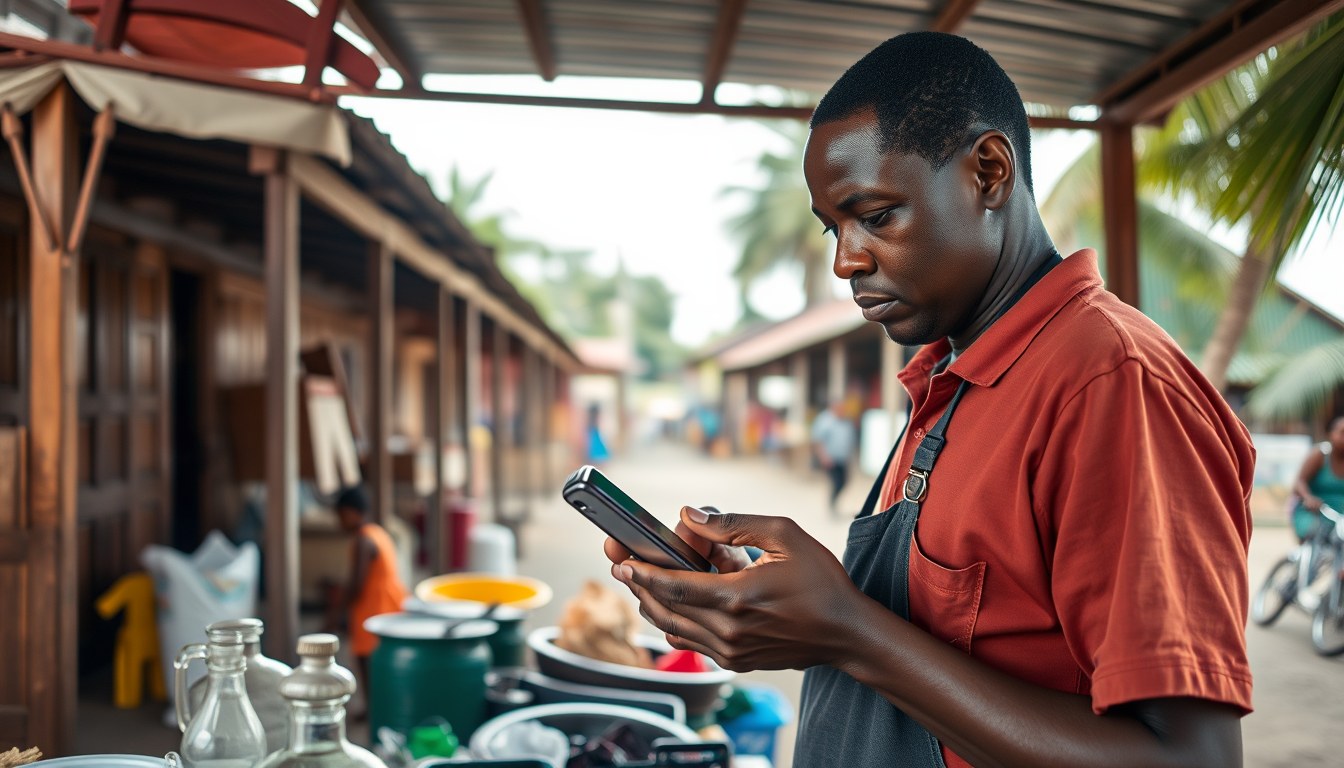
This week the National Assembly (DNA) began debating the Wet Financiële Inclusie, a framework law meant to bring people who sit outside the formal financial system into it. According to the draft on the DNA website, the bill sets out a legal route to a basic bank account, opens the door to electronic money, and gives the Central Bank (CBvS) a role as referee. Starnieuws reported that the debate began on Tuesday 10 November and was to continue on Thursday 12 November. It has already shown where the real difficulty lies. A right on paper is cheap. Making it usable in Paramaribo, in the interior, and for an SME owner paying by the transaction is not.
The bill is being handled alongside the draft law on supervision of the deposit-protection system. That pairing matters, because one law gets people into banks and the other promises to protect their savings once they are there. MPs from several parties have used the sitting to press for answers that the text itself does not give.
What the bill actually does
The draft published on the DNA website is built around the basic bank account. As I read it, the draft says residents holding a valid ID should be able to enter the formal system after a minimum check, that people receiving a state benefit should be enabled to open a basic account, and that licensed legal entities get simplified due diligence. It appears to oblige credit institutions to offer the services needed to open, use and close such an account in Surinamese dollars, calls for minimal service charges, gives a refused applicant a complaint route to the Central Bank, and provides for administrative fines.
One caveat on sourcing. The PDF on the DNA site is a scanned document that carries a 2025 file date, so it is an earlier draft rather than a confirmed final text, and the scan is hard to read reliably. The summary above is my reading of that draft and could not be cross-checked against the final version. Amendments tabled in this week's debate may change it. Readers should check article-level detail against the version the Assembly finally votes on.
E-money, with guardrails
The draft also appears to legitimise electronic money, treating it as convertible to cash and not as a deposit, with backing requirements for issuers and limits on fees and data sharing. A separate draft law on supervision of payment service providers is a companion piece. Business body VSB asked its members on 9 November to study the draft Financial Inclusion Act and the draft Payment Service Providers Supervision Act and to send in comments, bottlenecks and recommendations, according to Dagblad De West.
That sequencing is a risk. Fintechs and telecom operators cannot easily plan products around a framework law whose companion rules are still being drafted. If the law leaves details to the Central Bank, its directives would carry much of the weight.
The fee question MPs raised
NDP caucus leader Rabin Parmessar used Thursday's debate to attack bank charges. According to SUN, he pointed to De Surinaamsche Bank's ATM withdrawal fee of SRD 17.60, in force since 1 August 2026, which he called a considerable sum for someone withdrawing SRD 200. By simple arithmetic that is 8.8 percent of the amount. He also cited DSB's 2025 net profit of SRD 788.9 million, while the report notes that this figure does not show how profitable any single service is. He asked the Central Bank to make transparent how much interest each bank received from open-market operations (OMOs), and to use its legal powers to promote transparent and reasonable tariffs. He estimated that OMOs have cost taxpayers more than SRD 10 billion in interest since 2021. That is his estimate, not an audited figure.
As I read the draft, it speaks only of "minimal" service charges and leaves the numbers to the Central Bank. If the law is to mean anything for a state-benefit recipient or a market vendor, the fee ceiling for a basic account will decide it, not the entitlement itself.
Access without internet
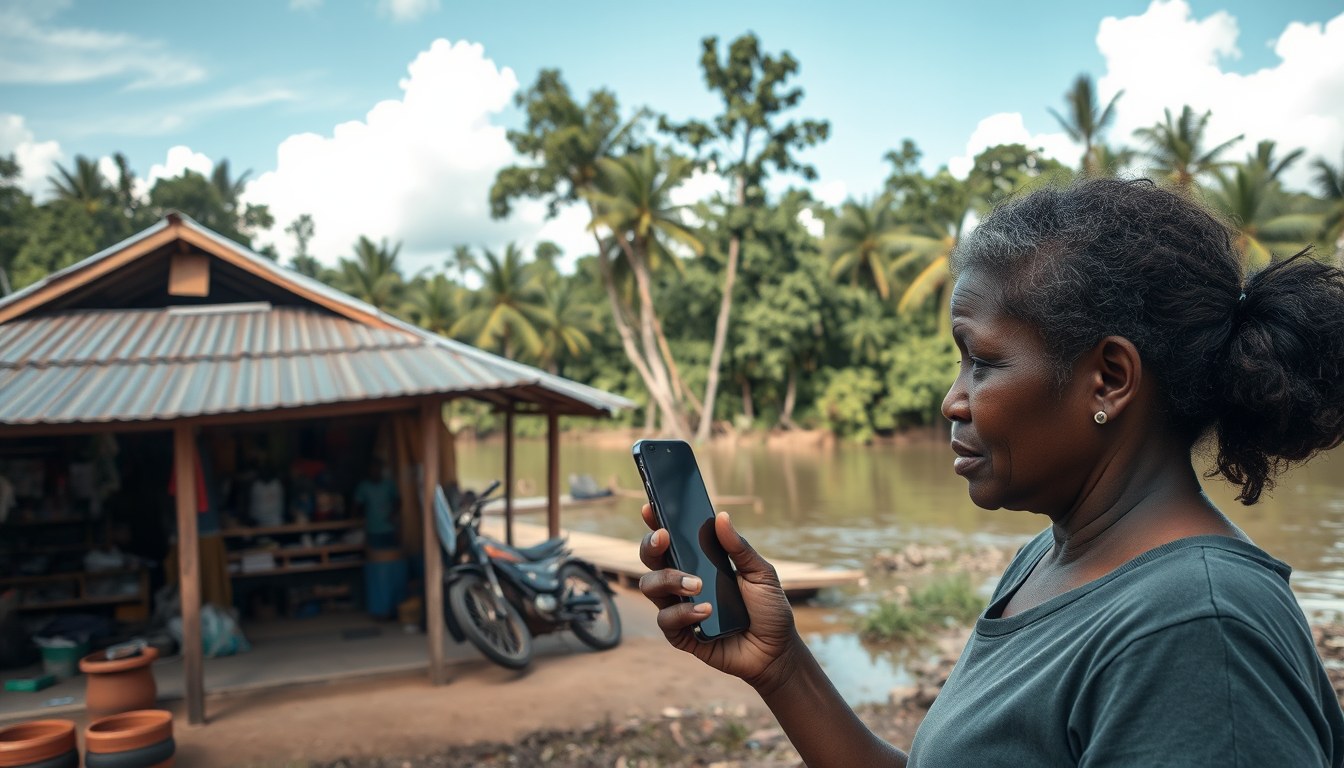
The sharpest practical debate was about geography. Silvana Afonsoewa (NDP), who chairs the commission of rapporteurs, said options for interior residents are insufficiently developed. She wants the law to allow payments by SMS and USSD on simple phones without internet, and to permit local intermediaries where people can deposit and withdraw cash. She also wants the law's evaluation to report separately on access in the interior. Ingrid Bouterse-Waldring, a committee member, warned that digital services must not exclude people without a smartphone, reliable internet or a steady income, and asked how services will reach all districts.
VHP caucus leader Asiskumar Gajadien argued that the digital ID card is not yet sufficiently linked to banking, so people still have to present several documents to open an account, and called for an integrated approach across digital ID, telecoms, basic accounts and mobile financial services. VHP MP Kishan Ramsukul asked the government to study satellite internet for poorly covered areas, and VHP MP Johnny Kasdjo asked about agreements with Telesur and Digicel on expanding interior coverage and when villagers could actually use digital payments. In the draft text as I read it, I did not find coverage obligations for telecom operators; that should be checked against the final text.
What to watch
- The fee definition. Whether "minimal" becomes a number, in the law or in a Central Bank directive.
- Agent banking. Whether the final text legalises cash-in/cash-out agents and USSD, as the committee chair requested.
- Companion legislation. The payment-providers law and the deposit-protection regime, where MPs want the proposed SRD 50,000 cap recalculated. Afonsoewa said, as reported by Starnieuws, that 89.9 percent of savers would be fully covered by the proposed amount; the international benchmark cited by the government is 90 to 95 percent.
- Government response. Starnieuws reported that the government had not yet responded to the Assembly's proposals, so the final shape remains open.
For SMEs and informal traders, the bill could be a genuine opening: a legal route into a bank account, and later a credit history. For banks, it may mean lower-margin accounts and a complaint channel to the supervisor. The policy test is whether Parliament writes fees, agents and coverage into the text, or leaves them to guidelines that may take years.
Sources & further reading
- De Nationale Assemblée: draft Wet Financiële Inclusie (PDF, scanned)
- Starnieuws: Afonsoewa en Gajadien willen bankieren zonder internet mogelijk maken
- Culturu: VHP wil digitale identiteit koppelen aan bankdiensten
- SUN: NDP-fractieleider wil meer transparantie over bankkosten en kredietverlening
- Starnieuws: DNA-leden willen garantie van SRD 50.000 voor spaarders herzien
- Suriname Herald: Afonsoewa wil nieuwe berekening vóór besluit over bescherming van SRD 50.000
- Dagblad De West: VSB vraagt bedrijfsleven om input over nieuwe financiële wetgeving
- Related on wimpel.online: Pass the deposit guarantee, then fix the number
- Related on wimpel.online: Ondernemersdag Eve: Suriname's SME Finance Has a Map Problem