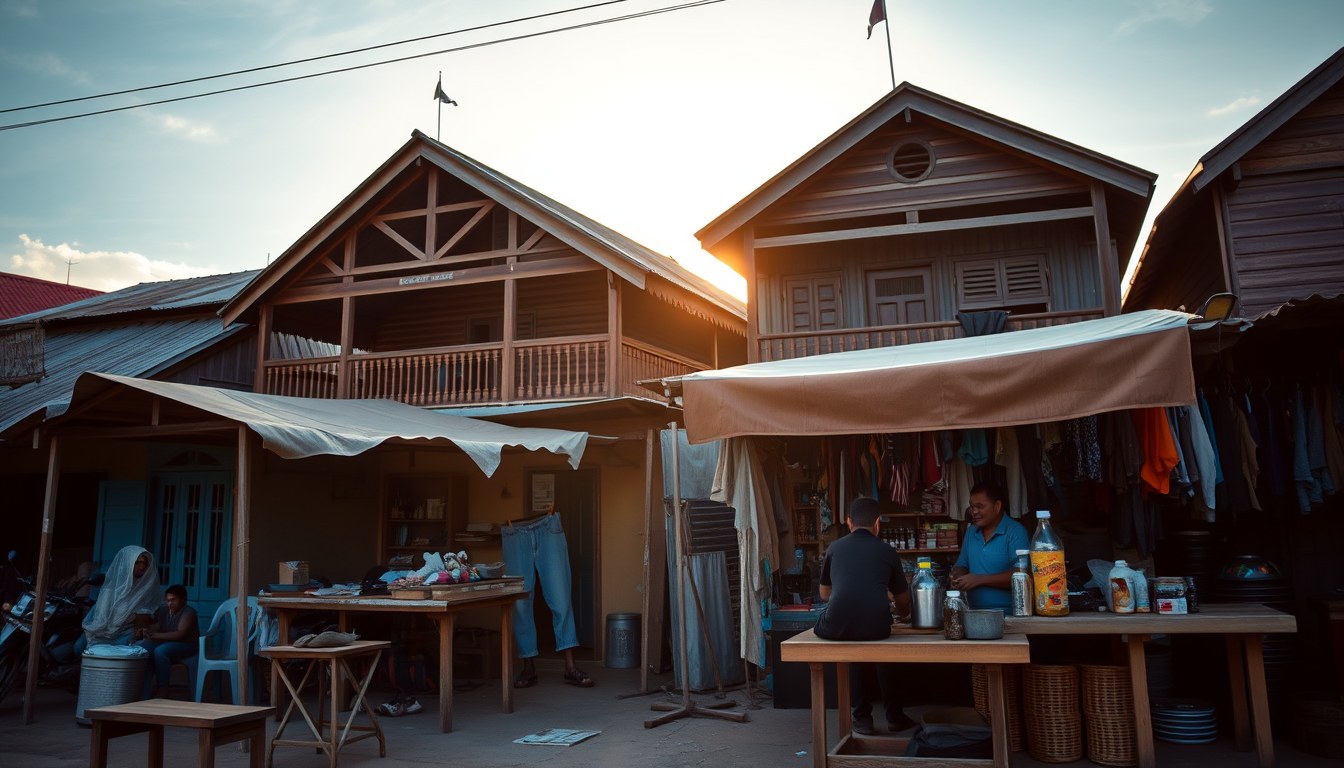
Next Friday, 20 November, Ondernemershuis Paramaribo holds Ondernemersdag 2026 on the fifth floor of the Assuria Low Rise. The event runs from 11:00 to 20:00, is free (registration is required) and promises masterclasses on topics including financing, AI, marketing and sales, an Ondernemersplein where young entrepreneurs can present themselves, and the closing of the Ecosysteem Moves 2026 programme. From 17:00 it launches ImpactClub, a new entrepreneur community. On paper, it is a networking day. In substance, it is a test of something more important: whether Suriname's growing menu of SME finance products actually reaches the people it was designed for.
The menu has indeed grown. The state development bank NOB, the Inter-American Development Bank, the World Bank and at least one commercial bank are each involved in recent products and programmes. What has not grown at the same pace is the founder's ability to tell which layer fits their business. That is the map problem.

Four layers of finance
Start with the production credit fund. The Productie Krediet Fonds (PKF) reported in March 2026 that it approved loans worth just over SRD 41 million in its second operating year, which a separate summary of the impact report dates to August 2024 through August 2025. According to Starnieuws, loan applications rose by almost 63%, the average loan climbed to SRD 1.7 million, and financed businesses expanded production by almost 50% and staff by an average of 25%. Most loans went to Paramaribo and Wanica; applications also rose in Nickerie, Para and Marowijne.
Second, the youth product. The NOB's Level-Up Krediet, launched on 30 January 2026, lets 18-to-27-year-olds borrow up to SRD 400,000 for activities in areas such as production, processing, creative sectors and ICT. Terms run to a maximum of five years, the NOB aims to assess a complete application within 31 days, and it offers help with Chamber of Commerce (KKF) registration and permits. According to the Government of Suriname and the Suriname Herald, NOB president-director Sandy Cameron presented the facility as a deliberate push for young entrepreneurship, with guidance and follow-up alongside the loan.
Third, the bank channel. In August 2026 the NOB and Finabank signed the first second-tier loan agreement under the IDB-backed "Financing Program for Productive and Sustainable Development in Suriname" (SU-L1069). Finabank is the first commercial bank to receive extra credit funds through it, with special attention to women-led, organic, Maroon and Indigenous businesses. Starnieuws reported in May 2024 that the underlying IDB loan was US$10 million, that about 500 firms could qualify, and that a guarantee fund would cover up to 60% of the loan for an individual firm, or up to 80% for women, Indigenous and tribal entrepreneurs in the interior.
Fourth, the information layer. The Ministry of Economic Affairs, Entrepreneurship and Technological Innovation (EZOTI) launched Financieringswijzer.sr on 4 November 2025. According to the platform's own about page, it was developed with World Bank support, is available in Dutch, Sranan Tongo and English, and is meant to help entrepreneurs find financing options.
What the numbers do and do not say
The PKF figures are encouraging, but they need context. SRD 41 million over a year is a small sum next to the economy's needs, and the fund itself flags the gaps: women entrepreneurs are approved less often, regional spread needs attention, and borrowers struggle with bureaucracy, land allocation and weak financial administration. A summary of the impact report also says Sipaliwini and Coronie had not yet received any PKF loans. A rising average loan of SRD 1.7 million may also mean the fund reaches established small firms more readily than the micro-founder, although the published figures do not break this down.
The Finabank agreement is a structural step, because it moves development money through a bank that already knows its clients' cash flows. But the published reports give no loan amounts, interest rates or tenors for that line. Until banks publish these, a founder comparing a Level-Up loan with a second-tier bank loan is comparing a known product with an unknown one.
The cliff behind the map
The Financieringswijzer's about page names the risk. Its stated aim is to sustain growth even after the SCSD and SURGE programmes have concluded. SURGE, the World Bank-financed project, had by April 2024 assisted more than 200 companies and given grants to 130 SMEs, about 60% of them women-owned; one recipient, the cassava and fruit processing cooperative Surivit, received $300,000. Grants of that kind are not a permanent feature. The country's question for 2027 is what replaces them: more PKF capital, more guarantee cover, or bank lending that does not need a donor's backstop.
What to watch on 20 November
- Published terms. Banks and institutions at the event should state rates, tenors and collateral rules for second-tier lines, not just their enthusiasm.
- Guarantee uptake. The IDB-backed guarantee only matters if banks use it to lend without full collateral to first-time borrowers.
- One front door. The Financieringswijzer, the NOB and bank branches should point to each other. A founder should not need to visit four sites to learn that a product exists.
- Regional reach. Nickerie, Para and Marowijne are rising, but Sipaliwini and Coronie had not yet received PKF loans.
The verdict
Suriname no longer has a shortage of SME finance announcements. It has a shortage of comparable, published terms and of evidence on who is actually approved. Events like Ondernemersdag are useful if they force that conversation into the open; they are decoration if they do not. The better test arrives in the 2027 reporting cycle: how many borrowers outside Paramaribo and Wanica, how many women, and what happens when the grant money runs out.
Sources & further reading
- VenuDash: Ondernemersdag 2026 event page
- Starnieuws: Productie Krediet Fonds keurt SRD 41 miljoen goed
- VSB: PKF verstevigt rol als aanjager van productie en werkgelegenheid
- Starnieuws: NOB lanceert krediet tot SRD 400.000 voor jonge ondernemers
- Government of Suriname: NOB Level-Up Krediet
- Suriname Herald: NOB stelt tot SRD 400.000 beschikbaar
- Starnieuws: Finabank eerste commerciële bank in NOB/IDB-programma
- Starnieuws: IDB leent NOB US$ 10 miljoen voor duurzaam ondernemen
- Government of Suriname: launch of Financieringswijzer.sr
- MKB-Financieringswijzer: about
- World Bank: SURGE and Surinamese small businesses
- Related on wimpel.online: Stop blaming banks