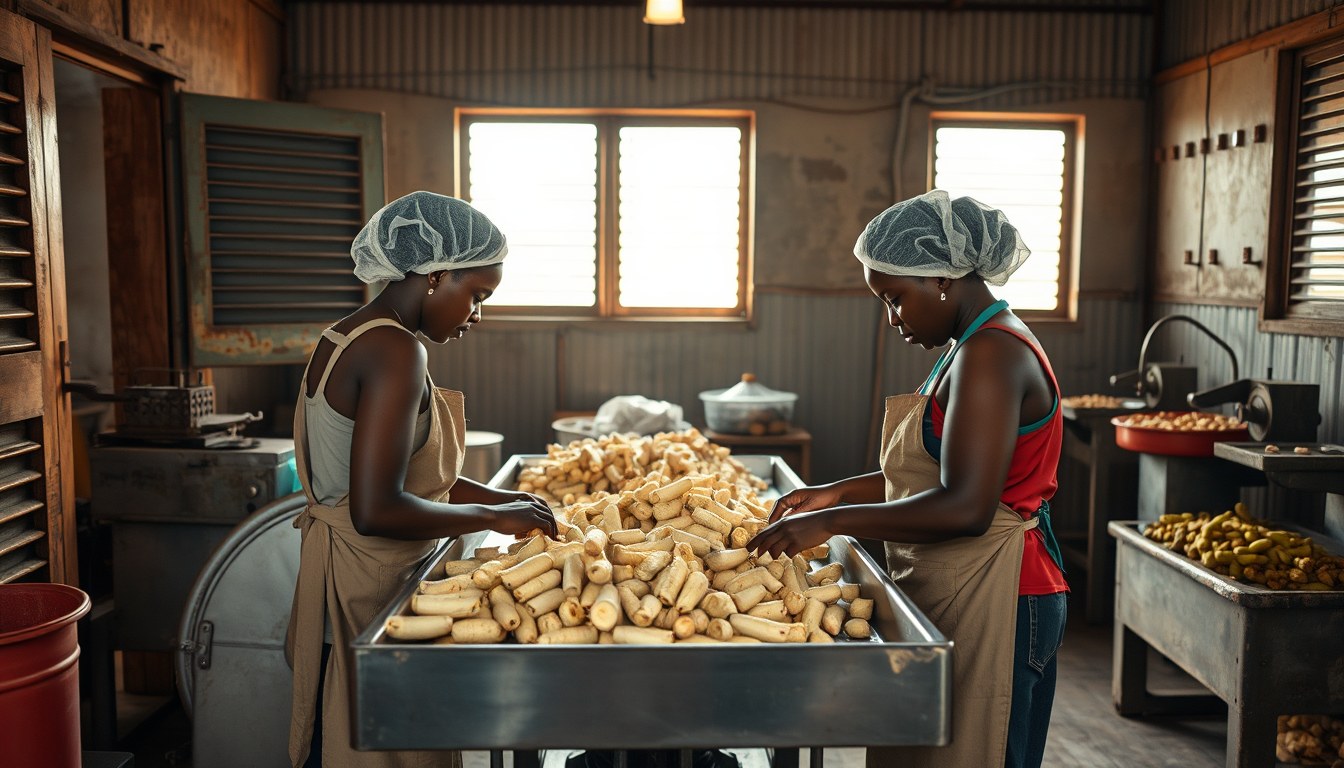
Suriname has put a large number on its industrial ambitions. Andrew Baasaron, minister of Economic Affairs, Entrepreneurship and Technological Innovation (EZOTI), is aiming for about US$500 million for small and medium-sized industry, including agriculture, food processing and manufacturing, GFC Nieuws reported on 16 November. The outlet was explicit: this is an intended investment volume, with no confirmation that the full amount has been pledged or made available.
That distinction matters for any business owner tempted to plan around the figure. Suriname Herald wrote on 22 November that the minister wants to "invest" US$500 million, while GFC speaks of attracting it. Neither report names a financier, sets out a disbursement schedule or describes how a firm would apply. For now, it is best read as a fundraising goal.
What is actually signed
The firmest piece is institutional. On 21 September, Suriname and the United Nations Industrial Development Organization (UNIDO) signed a Programme for Country Partnership (PCP) in New York, covering 2026 to 2031. Baasaron signed with UNIDO's director-general, Gerd Müller, as De Ware Tijd also reported.
According to Starnieuws, the programme rests on four pillars:
- better policy and institutions for sustainable industrial development;
- more competitive firms, agro-industrial value chains, green industry and skills;
- mobilising green and blended finance;
- forest-based value chains and the bio-economy.
The same report carries the crucial caveat: signing the PCP does not mean that all planned projects and investments are financed. It is a strategic framework, and concrete programmes still have to be developed.
Baasaron has described the end point in practical terms. In early October, Suriname Herald reported him saying that what one ultimately wants to see is processing units and factories. The PCP is meant to form the basis for an industrial roadmap. The work includes identifying promising sectors, processing local raw materials where possible, establishing which materials and means of production must come from abroad, and better matching output to markets.
The money closer to hand
A much smaller sum is closer to the ground. The minister said in October that his ministry had been promised SRD 25 million for the current budget period for the KMO Fund, a vehicle set up in 2017 for small and medium-sized enterprises, according to the government's account of the interview. At the central bank's weighted average selling rate for non-cash transactions, SRD 37.54 to the US dollar on 26 November, that is about US$670,000, or roughly 0.13% of the US$500 million target.
The two should not be added together or confused: none of the reports we read links the KMO Fund to the larger figure. Nor should the SRD 25 million be read as all new credit. The government's account says the amount will help the ministry provide training in Paramaribo and the districts for the rest of the budget period, mainly on business planning for young entrepreneurs. Suriname Herald reports that training and guidance are among the intended uses. Supported entrepreneurs get coaching, and the government checks how money is used.
The fund also lends. The ministry's KMO Unit page, last updated in January 2024 according to its page data, lists Trustbank Amanah as fund manager and these terms:
- financing of up to SRD 1 million, for a term of up to 10 years;
- a "profit" charge of 5% a year;
- an own contribution of at least 25% of the financing amount;
- monthly repayment, with an initial grace period of up to one year if required.
Applications start at the KMO Unit with an intake and pre-screening before going to the bank. Because the page predates the October announcement, entrepreneurs should confirm that these terms still apply and that money is available for new loans.
The minister is clear about the need. He says small and medium-sized businesses make up some 70% to 80% of the economy, and that what they are mainly looking for is money.
Zones, partners and paperwork
The economic case offered for local production is import substitution. The minister estimates that 80% to 85% of products consumed in Suriname are imported, and sees more local output as a structural answer to high prices.
Economic zones are one proposed tool. GFC reports that Paranam, Albina and Nickerie have been named as possible locations, with parts of Paramaribo also under consideration. These are candidates under study, not designated zones. Suriname Herald reports that EZOTI is working with the ministries responsible for spatial planning and land policy on legislation for zones for economic activity. Its account describes a broader zoning exercise, covering the harbour area, the city centre and residential neighbourhoods, meant partly to clarify where businesses may operate. The PCP will also explore special economic zones, and UNIDO has said it is willing to help design a framework. A manufacturer should not buy or lease land on the strength of a shortlist.
Partnerships are the second tool. The ministry wants local firms, especially smaller ones, better prepared to work with foreign investors and large companies. Baasaron argues that Surinamese businesses still cooperate too little with one another. The ministry is developing training to prepare entrepreneurs for talks with foreign companies, and a working group has been set up to guide the process.
There is also a compliance side. The ministry wants tighter checks on labelling and product rules. An exhibition of cash-register systems is scheduled for 1 December, and under the plans, businesses would have to itemise purchases on receipts so that the tax authority can better verify income. Small retailers may feel that sooner than any industrial financing.
What to watch next
UNIDO representatives were expected in Suriname in the week of 18 to 25 November, according to Suriname Herald. GFC had reported that concrete plans were due to be presented to businesses from mid-November. Our searches turned up no published account of the visit's results.
Five things would turn the target into something bankable: a costed list of projects; named financiers with amounts, split between grants, loans and private equity; eligibility rules that a ten-person food processor could realistically meet; a legal basis and a timetable for the zones; and a public tracker separating money sought, pledged, signed and disbursed.
Until then, the sensible move for SMEs is preparation rather than expectation. Get accounts, registrations and permits in order, work out which imported product you could credibly replace and at what cost, find partners for volume you cannot deliver alone, and ask the ministry about training and current KMO Fund terms. Those steps pay off whether the eventual sum is US$500 million or a fraction of it.
Sources & further reading
- GFC Nieuws: Suriname seeks US$500 million for small and medium-sized industry (Dutch)
- Suriname Herald: US$500 million for industry and local firms (Dutch)
- Starnieuws: Five-year UNIDO programme (Dutch)
- De Ware Tijd: Suriname and UNIDO sign the PCP (Dutch)
- Suriname Herald: Baasaron on industrial development through UNIDO (Dutch)
- Government of Suriname: support for small and medium-sized entrepreneurs (Dutch)
- Suriname Herald: SRD 25 million for SMEs (Dutch)
- Government of Suriname: KMO Unit and KMO Fund information sheet (Dutch)
- Central Bank of Suriname: exchange rates
- Related: Ondernemersdag Eve: Suriname's SME Finance Has a Map Problem