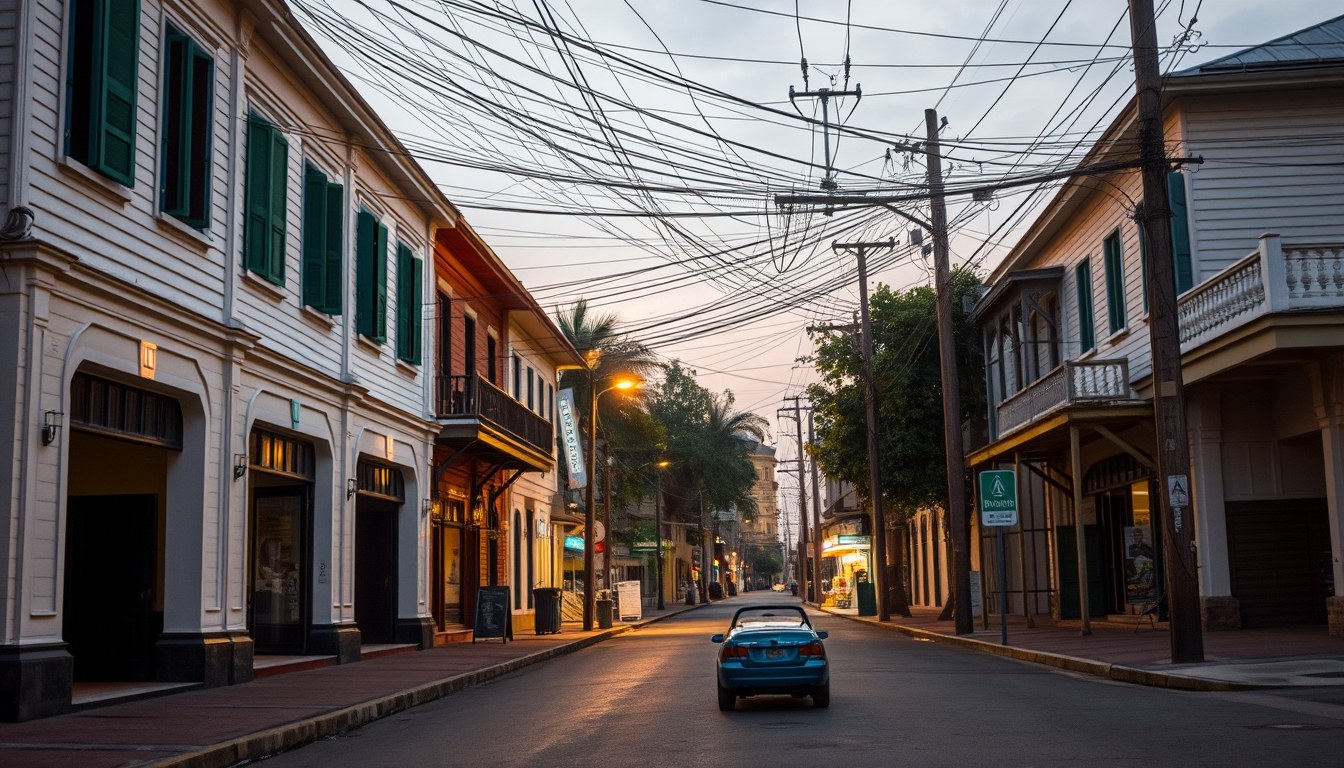
For a month now, the most important variable in a Paramaribo business plan has not been the exchange rate or the oil timetable. It has been the grid. Since 25 August, N.V. Energiebedrijven Suriname (EBS) has been switching off parts of the EPAR area (Paramaribo, Para, Wanica, Commewijne and Saramacca) in rotation, for at least three hours at a time. EBS said it had no reserve capacity left and could not say in advance which areas would go dark, because that depends on grid load, consumption, weather and temperature (Waterkant).
In September the arithmetic, and the cost to business, came into focus. Load-shedding has stopped being an inconvenience. It is now a line item.
The numbers behind the dark hours
Minister of Natural Resources David Abiamofo set out the gap in early September: peak demand in the EPAR area of about 280 MW against roughly 254 MW of available production, a shortfall of about 26 MW. Demand is up about 10% on 2025 (Key News). The problem, he insisted, is generating capacity, not higher fuel prices (Dagblad De West).
His breakdown of current supply shows how thin the system is:
- Afobaka (SPCS): about 118 MW, of which about 80 MW reaches EPAR and about 30 MW goes to Suralco/Rosebel Zijin and gold miners.
- EBS, Saramaccastraat: about 110 MW.
- Staatsolie's thermal plant at the refinery: about 60 MW.
The structural fix, Abiamofo said, needs about US$500 million over two to three years, money that EBS and Staatsolie cannot find without central government. EBS is working on a solar tender. His verdict on the near term was blunt: "We moeten het hiermee doen" (we have to make do with this).
What it costs a small business
The burden of that phrase falls unevenly. EBS's first request on 25 August was that businesses and factories with their own generating capacity switch to it at critical peak moments. Firms that already own such capacity can comply. For an SME, a guesthouse or a small workshop, the options are more expensive, and each carries a trade-off:
- Generators: the fastest answer, but a capital outlay plus fuel and maintenance costs that larger competitors absorb more easily.
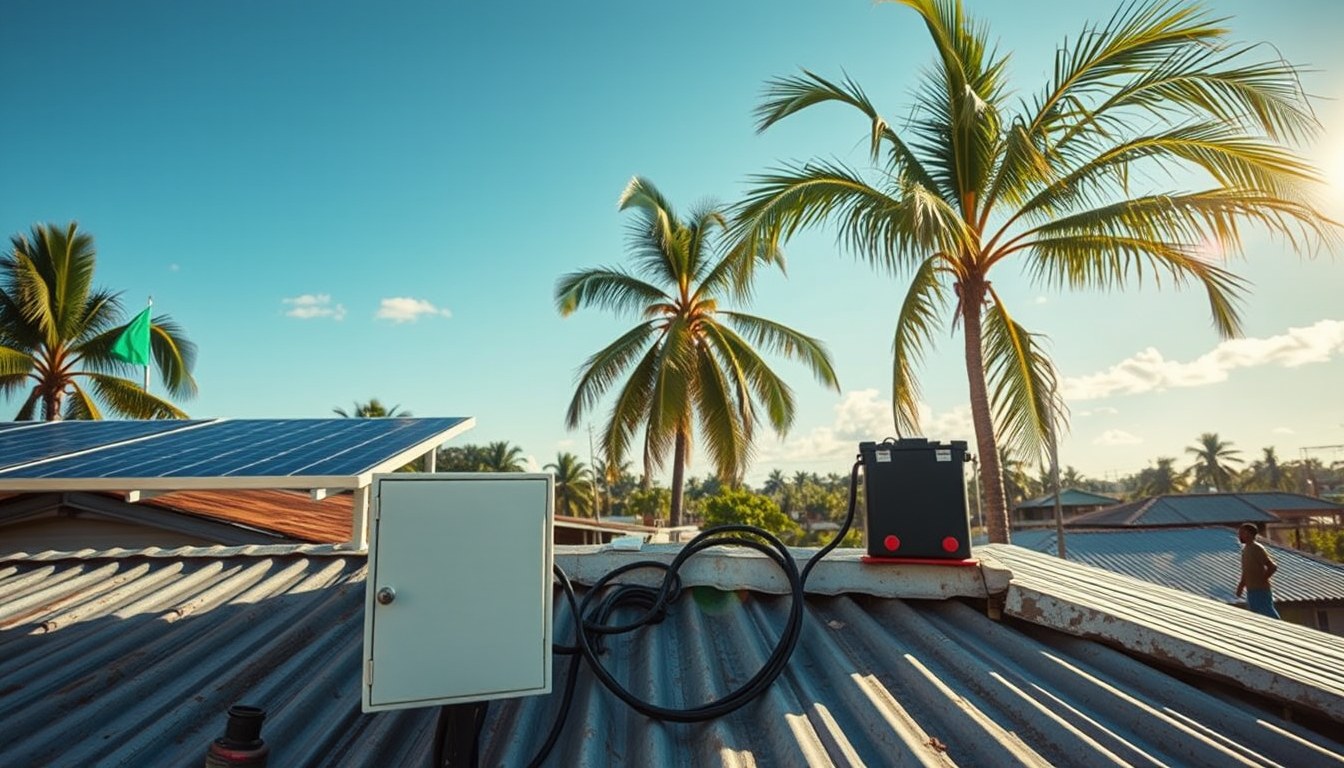
- Solar with battery storage: lower running costs, but a heavier upfront bill.
- Shifting operations off-peak: cheap in cash terms, costly in flexibility. It can work for ovens or workshop machines, far less so for a hotel's air-conditioning or a shop's opening hours.
For tourism operators the damage can be reputational as well as financial: a guest sitting in a dark, hot room is likely to blame the hotel, not the utility.
What the VSB got from EBS
On 15 September the Vereniging Surinaams Bedrijfsleven (VSB) and other business groups sat down with EBS (Dagblad De West). The outcome was clarification rather than relief. EBS explained that it cuts power per feeder, not per connection. Critical facilities such as hospitals are spared as far as possible, but in mixed residential and commercial districts businesses cannot be fully separated from homes.
The business side pressed for advance notice of planned outages and for affordable solutions for SMEs, tourism and smaller manufacturers. Emergency power, shifting activity off-peak and solar with battery storage were all discussed. The most consequential item may be the least visible: EBS said a new legal framework for third-party generation is at an advanced stage but still needs a final review. The VSB argued that the energy problem should not be treated as merely temporary.
Why Staatsolie's 34 MW does not rescue 2026
On 17 September Staatsolie's director-general, Annand Jagesar, briefed President Jennifer Simons on plans for two generating machines totalling 34 MW, at about US$54 million including a machine hall and transmission facilities (gov.sr). On paper that would cover today's 26 MW gap. In practice, no delivery date was announced, and the government's own account notes that developments on the world market can lengthen delivery times for such machines. And if demand keeps growing at anything like 10% a year, a new block of capacity would be absorbed quickly.
The lesson for entrepreneurs is uncomfortable but clear. Reliable power in the EPAR area is, on the minister's own estimate, a multi-year project with a US$500 million price tag. Until it arrives, resilience is a cost every business must budget for. Firms that treat backup power, solar and smarter scheduling as investments rather than emergencies are better placed to keep their customers. And the third-party generation framework, once finalised, could turn today's private stopgaps into a market of their own.
Sources & further reading
- Waterkant: EBS kampt met stroomtekort, vijf districten beurtelings minimaal 3 uur zonder stroom (25 Aug 2026)
- Key News: Abiamofo, US$ 500 million needed to reduce loadshedding (2 Sep 2026)
- Dagblad De West: Abiamofo, loadshedding is door tekort aan opwekkingcapaciteit en niet door gestegen brandstofprijzen (3 Sep 2026)
- Dagblad De West: Bedrijfsleven trekt aan de bel over aanhoudende loadshedding (21 Sep 2026)
- gov.sr: Staatsolie bespreekt uitbreiding elektriciteitsvoorziening en offshore-ontwikkelingen met President (17 Sep 2026)
- Not Waiting for Government: A Frontier Story