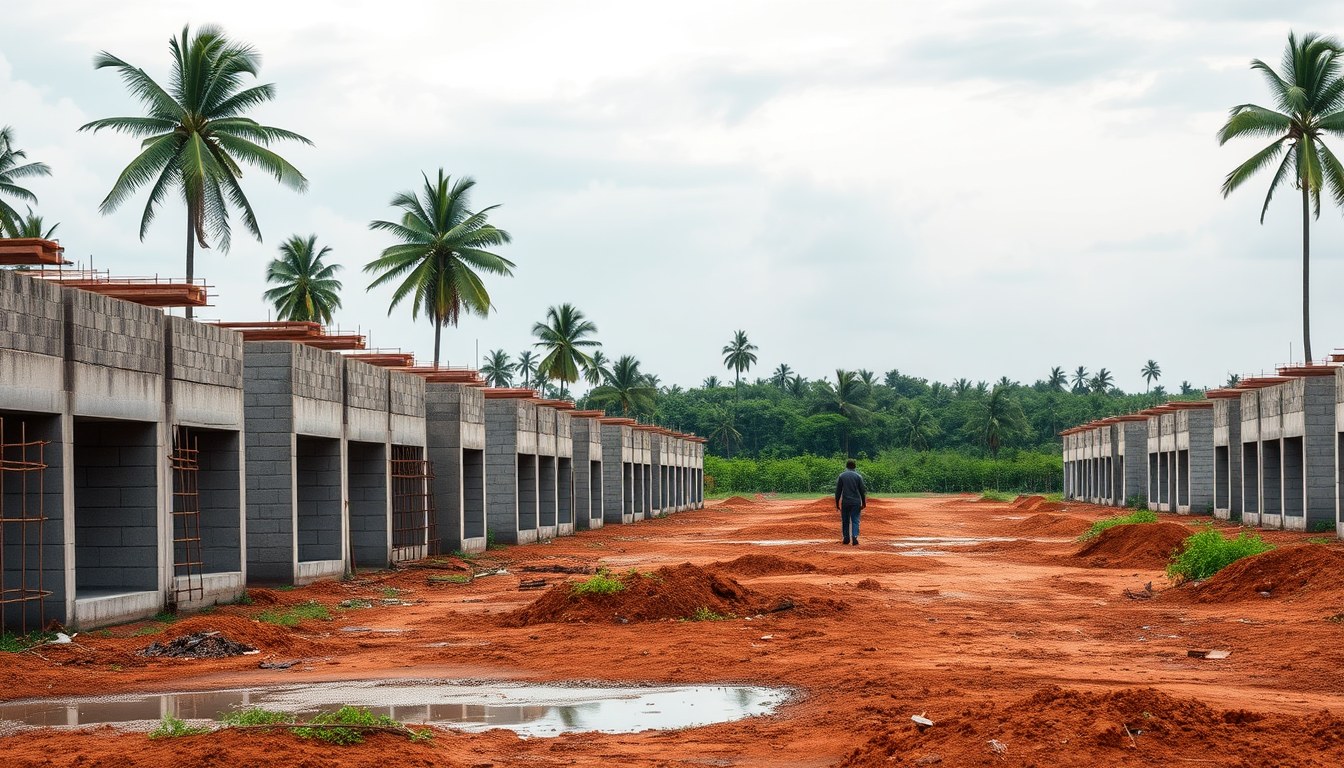
In little more than a week in August, Suriname's housing ministry showed both faces of its housing push. Diana Pokie, Minister of Social Affairs and Housing (Sozavo), laid the first stone for 150 homes at Voorburg in Commewijne, as reported on 19 August. Days later Aristo Kelly, director of the Directoraat Volkshuisvesting, announced that every earlier allocation in the Koela project at Pontbuiten would be withdrawn.
The two stories are easily filed separately: one about construction, the other about politics. They belong together. Bricks are the easy part of a housing programme. The hard part, and the part that decides whether public housing builds trust or erodes it, is choosing who gets the keys.
Voorburg: a programme with a price tag
The Voorburg homes form half of the Affordable Housing Project (AHP): 300 units in total, with the other 150 at Reeberg in Wanica. Two construction firms are involved, and the ministry wants all 300 finished this year, a timeline that Starnieuws noted depends on the schedule being kept. Two days before the ceremony, a United News report said the government would not reach its aim of 300 new homes in 2026. Pokie was blunt about the inheritance: "Toen deze regering aantrad, was de realisatiegraad van het project zeer laag", meaning progress was very low when the government took office.
Two design features matter more than the ceremony. First, households that are allocated a home must pay an own contribution of SRD 135,000. Second, the list is closed: no new registrations are being accepted, and selection runs through the AHP Project Implementation Unit in cooperation with the Islamic Development Bank, under specific conditions and criteria.
The contribution makes AHP a product for households with savings or access to credit, not for the poorest. That is a defensible choice, but it raises the stakes on the list itself. A closed register is efficient. It is also opaque unless the criteria, and the order in which candidates are served, are visible to the people waiting.
Koela: homes allocated before they existed
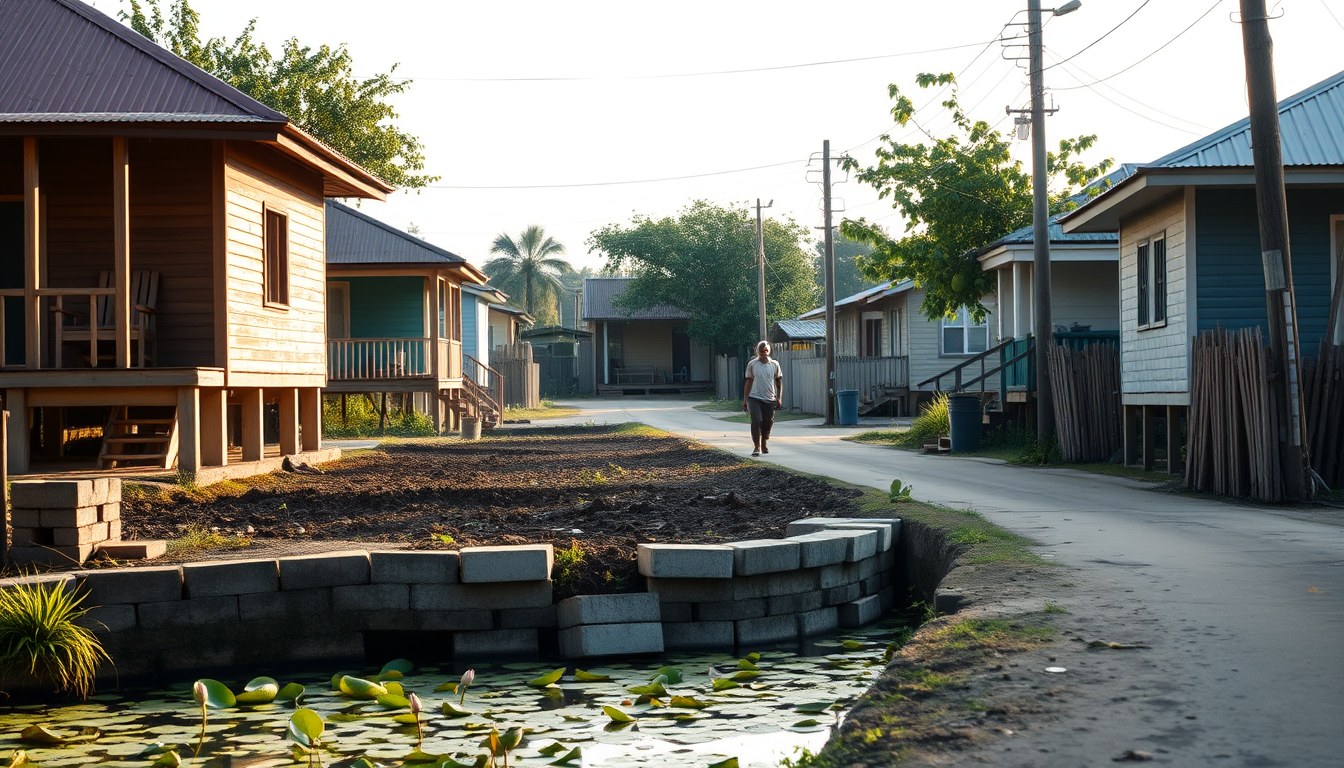
Koela, a former boys' boarding school site, was launched as a housing pilot in 2023 under the previous Santokhi-Brunswijk government, and it is where the opacity problem surfaced. Kelly told Suriname Herald on 24 August that everything issued would be revoked: "Alles dat is uitgegeven, zal ingetrokken worden." His charge is that under the previous Sozavo leadership homes were assigned before they were built: "Op het project zijn woningen toegewezen zonder dat die bestaan." He added that part of the original site is no longer available, with some land now used for other purposes: "De grond is plotseling verdwenen."
The replacement is procedural. Future Koela allocations will go through a special allocation committee drawing members from various sectors of society, explicitly to stop homes being handed out through personal connections. The committee will work with people who signed up through a registration link opened for the project. Pokie has said there are enough applications, that the 11 families already living on the site are guaranteed a home, and that a lottery may be used: "We zullen bekijken of een lotingssysteem kan worden toegepast." GFC Nieuws likewise reported that the ministry is only examining a lottery and that those families are a priority group.
The other side of the ledger
Ines Pané, who was Sozavo minister from December 2023 to July 2025, rejects the framing. She says the decisions issued in 2024 or 2025 went to people already living on the Sozavo grounds, who did not want to move and had been promised first access. Issuing them before construction was, in her account, normal: "Er hoeven geen woningen te staan om die toe te wijzen." Roughly 93 homes were planned in phases, and building stopped when funds from the Ministry of Finance and Planning did not come through.
Both accounts can be partly true. Allocating off-plan is not improper in itself, and both the old and the new leadership say people living on the site come first. What neither side has yet put in public is the paper trail: who received a decision, on what criteria, and in what order. That absence, more than the timing, is what turns an allocation into a political liability.
Why allocation is market infrastructure
Kelly's design goal is sound. Koela, which also houses a resocialisation programme for young people leaving detention, is meant to place them in a mixed community with young professionals, seniors and middle-income residents, because "Wij willen geen projecten met alleen lage inkomens, omdat je op lange termijn gettovorming kunt krijgen." The project is funded from the state budget, with a first phase of 55 homes due by December and 38 more planned later.
A mixed-income estate only works if each income band believes the door was fairly opened. For investors and lenders the lesson is practical: public housing that is allocated predictably takes pressure off a stretched rental market; housing allocated by favour distorts it. wimpel.online will judge the new approach on four tests: whether the committee's membership and criteria are published, whether any lottery is drawn in public, whether revoked holders get a fair hearing, and whether the first 55 Koela homes arrive by December.
Sources & further reading
- Suriname Herald: Pokie legt eerste steen voor 150 woningen in Voorburg (19 Aug 2026)
- Starnieuws: Pokie: 300 woningen Voorburg en Reeberg nog dit jaar gereed (19 Aug 2026)
- Suriname Nieuws Centrale / United News: Oplevering geplande 300 woningen dit jaar niet haalbaar (17 Aug 2026)
- GFC Nieuws: Grote belangstelling voor woningbouwproject Koela in Pontbuiten (19 Aug 2026)
- Suriname Herald: Veel belangstelling voor woningbouwproject Koela in Pontbuiten (20 Aug 2026)
- Suriname Herald: Jongensinternaat Koela blijft, resocialisatie krijgt moderne vorm (23 Aug 2026)
- Suriname Herald: Kelly: alle eerdere woningtoewijzingen Koela worden ingetrokken (24 Aug 2026)
- Suriname Herald: Ex-minister Pane: Koela-woningen waren toegewezen aan bewoners op terrein (25 Aug 2026)
- GOV.SR: Regering blaast leven in Koela te Pontbuiten (2023)
- Paramaribo's Rental Market Is Broken by Oil
- Paramaribo Property Mid-2026: Forecast Revisited