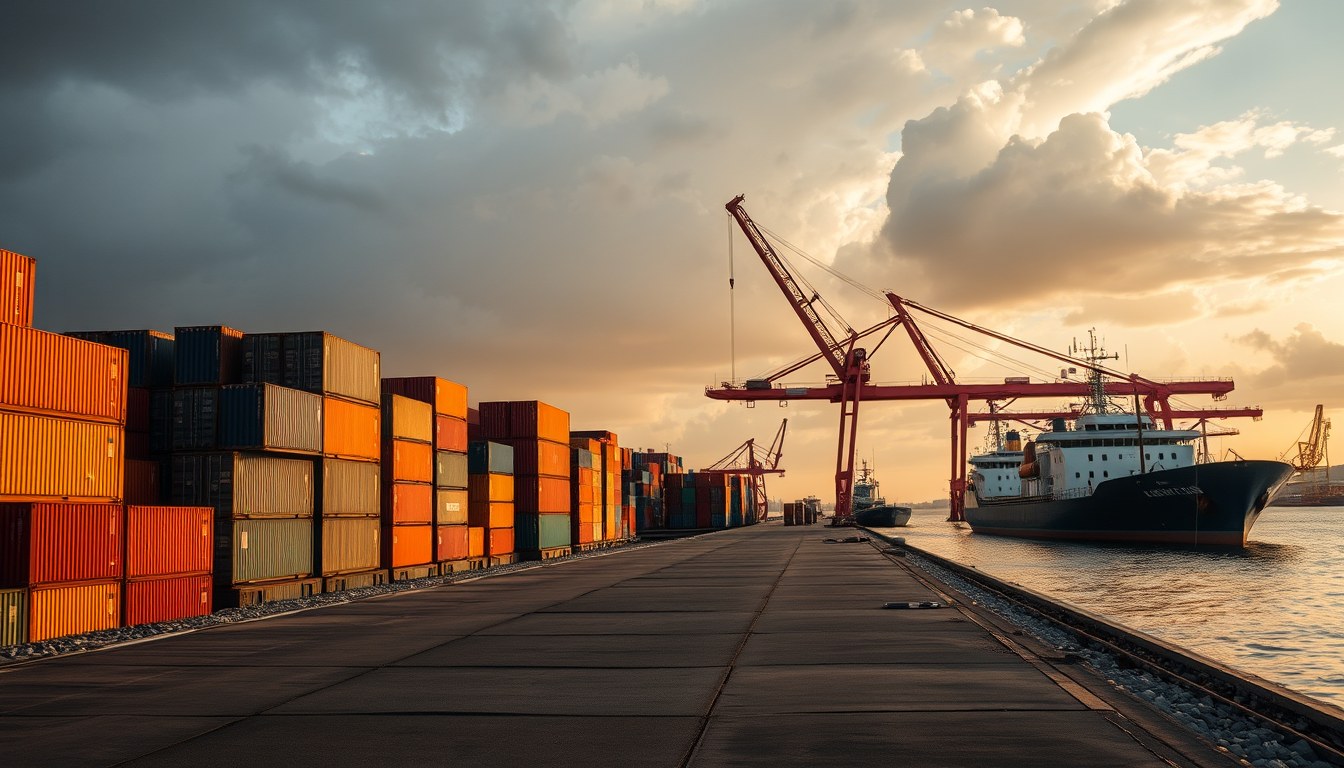
Most coverage of Suriname's oil boom looks offshore, at the FPSO, the Block 58 reserves and the first-oil date. The less glamorous question is what happens onshore when a USD 10.5 billion project needs steel, subsea gear and supply boats landed in Paramaribo. The answer runs through a company few outside the logistics trade could name: NV Havenbeheer Suriname, the state-owned port management company.
This week the Dutch trade title Schuttevaer reported that Havenbeheer expects cargo handling at Suriname's seaports to triple in the coming years, linked to the emerging oil industry. The article is paywalled beyond its opening and gives no specific year. The direction matches what the company's Manager Infrastructure has said publicly about carrier expectations. Here is who Havenbeheer is, what it is building and what it still has to prove.
A landlord, not an operator
Havenbeheer manages two ports: the Dr. Jules Sedney Port in Paramaribo and the general port at Nieuw Nickerie, according to its own website. Its stated main goal is to optimally accommodate economic activity in support of the national economy, and it rents out terrain and buildings. The actual cargo work is done by private firms. A freight-forwarder guide describes the company as the state-owned landlord of the Paramaribo port, with private stevedores doing the handling, among them DP World Paramaribo, named as the largest container terminal operator there, and VSH Transport.
That structure matters for how to read the story. Havenbeheer is a landlord rather than a cargo handler, so its incentive is to have capacity ready before the volume arrives, and its risk is building capacity that the oil cycle does not fill. The company also says it can connect over 300 refrigerated containers at once, a reminder that the port serves an ordinary import economy of food, vehicles and building materials, not only offshore operators. It says it won the Caribbean Shipping Association's Ludlow Steward award three years in a row, in recognition of growth and development, though it does not date them.
The quay that Hakrinbank is financing
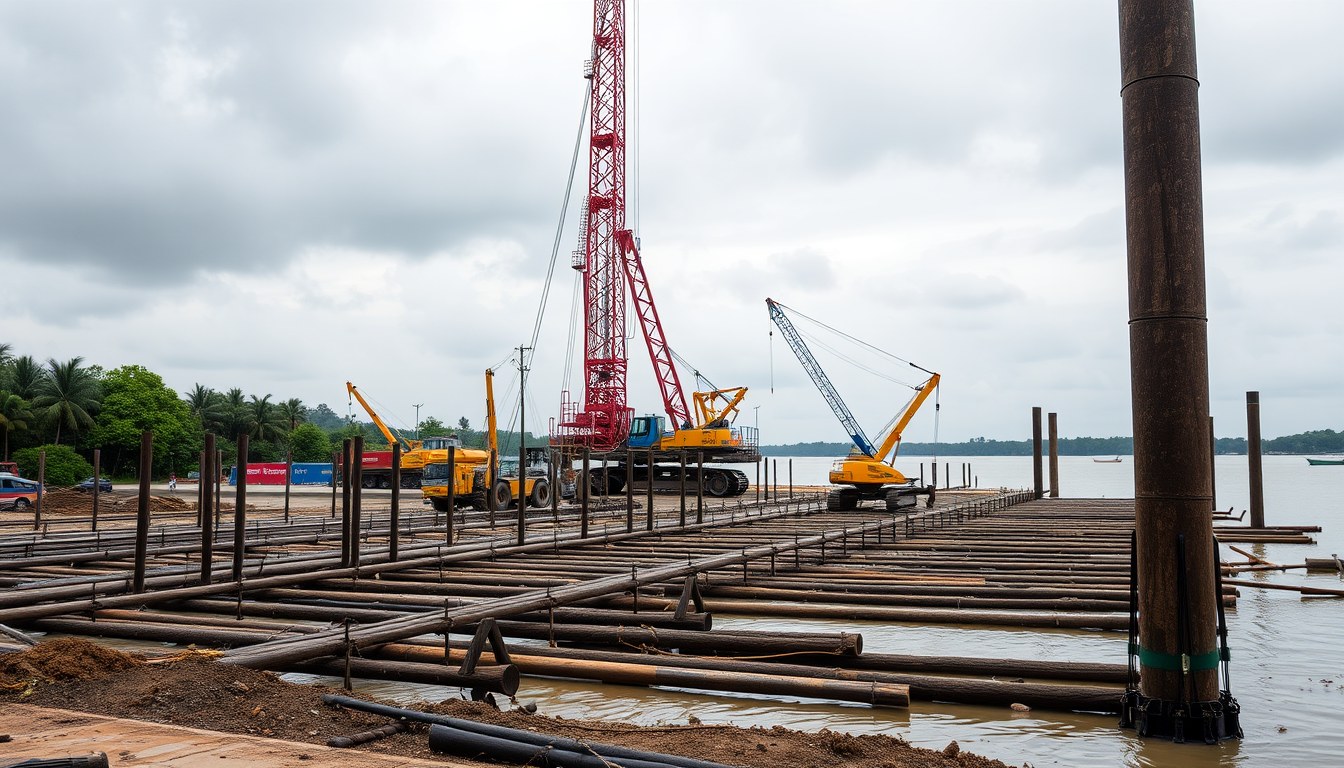
The clearest sign of intent is concrete. Havenbeheer signed a contract on 24 July 2026 with Haukes Construction N.V. for a new quay at the Paramaribo port, and piling began on 9 September. By the company's account the quay is 140 metres long, can carry 20 tonnes per square metre and should be finished within about 12 months. Hakrinbank N.V. is providing the financing. General manager Andreas Talea is the company's named signatory on the announcement.
It is the first phase. Aisa Tjon-Akon, the company's Manager Infrastructure, told Times of Suriname that a further 120-metre extension is planned afterwards, and that storage area will grow by 7.1 hectares; the 140-metre quay and the expanded storage area are due in September 2027. Havenbeheer is dredging along its quays to 7.5 metres at low water. Dredging the access channel deeper depends on a feasibility study by the Maritime Authority Suriname, so a ship-size ceiling remains outside Havenbeheer's control.
The financing arrangement is worth noting: a local commercial bank is financing a state port's expansion, which ties the project's financing to port demand forecasts that cannot yet be independently verified.
Oil cargo is already arriving
This is not purely speculative. Latitude 15, a maritime trade publication, reports that the first subsea equipment for GranMorgu, including components of a Long BaseLine positioning system, reached Paramaribo in late March 2026, with Havenbeheer announcing it on 20 April. In June the port received, handled and stored offshore equipment on a dedicated area in the north of the port. Medserv operates in Paramaribo as a shorebase, handling, storing and distributing equipment for offshore work.
The backdrop is GranMorgu, the TotalEnergies-operated project (40% TotalEnergies, 40% APA, 20% Staatsolie) with an FPSO designed for 220,000 barrels a day and first oil scheduled for 2028. According to Latitude 15, TotalEnergies describes Paramaribo as the principal hub for administrative activities, with support and supply functions also centred there.
Digital plumbing and skills
Capacity is not only berth length. Havenbeheer is building a National Port Community System, financed by the Inter-American Development Bank, so that port and trade parties can exchange data and cut waiting times. The platform, called CENTER PCS, went into phased use on 12 October 2026, according to the company's 16 October announcement. For now only the Maritime Single Window module is in production; the manifest and truck appointment module and an access control system are planned for later phases. Customs and the Maritime Authority were among six organisations in end-to-end testing.
Times of Suriname reports that the trucking centre now being built is meant to spread truck traffic, and that the Van 't Hogerhuysstraat and the bridge over the Saramacca canal are being rehabilitated as part of the same preparation. Tjon-Akon said traffic outside the port area needs an integrated national plan as growth continues after 2028.
On people, Havenbeheer and Port of Antwerp-Bruges founded the Suriname Port Training Institute in 2025, training local firms and participants from Caricom.
What to watch
- The 300% claim. Tjon-Akon said major shipping lines expect a 300% increase in cargo to be handled before first oil. That is a carrier expectation relayed by the port, not an audited number. Schuttevaer's text says "triple", while the caption of its photo says "300% more", and the two framings are not the same: a 300% increase would mean four times today's volume, whereas tripling is a 200% increase. Havenbeheer's own cargo statistics would settle it.
- Delivery in September 2027. Quay and storage area are both due then. Slippage would land just as GranMorgu construction ramps up.
- The channel. Quay depth means little if the access channel stays shallow; the Maritime Authority study is the gating item.
- Local share. Havenbeheer says the quay project involves local companies and professionals. Who actually captures the shorebase, trucking and storage revenue is the real local content test.
Havenbeheer is a modest-looking company with an outsized job: turning an offshore resource into onshore activity that stays in Suriname. Its record over the next twelve months, on time and on budget, will say more about that than any production forecast.
Sources & further reading
- NV Havenbeheer Suriname: First Pile Marks New Phase (9 September 2026)
- NV Havenbeheer Suriname: Gefaseerde deployment en go-live van de eerste fase van het Nationale PCS (16 October 2026)
- NV Havenbeheer Suriname: company website
- Times of Suriname: Havenbeheer maakt Dr Jules Sedney Haven Terminal gereed voor groei olie- en gassector
- Latitude 15: Dr. Jules Sedney Port expands as Suriname's offshore logistics needs grow (14 September 2026)
- Schuttevaer: Suriname verwacht explosieve stijging zeevracht (10 November 2026)
- Interworld Freight: How to Ship to Suriname
- Related on wimpel.online: Halliburton's GranMorgu Win: Where Local Suppliers Fit In