Most oil-contract announcements tell a Surinamese entrepreneur very little: a rig here, a vessel there, a vague promise about “local content”. Halliburton’s award of 13 July 2026 is different, if only slightly. In announcing integrated drilling and completions contracts for TotalEnergies’ GranMorgu deepwater development, the Houston-based service company named two concrete pieces of work it says were carried out with local suppliers in Suriname. That makes it a rare case study in where a small firm actually fits into a tier-1 contractor’s supply chain.
It is also a lesson in reading the fine print. The press release discloses no contract value, no well count, no timeline and no figures for local spend or jobs. What it does offer is a map of the kind of work that sits closest to the ground.

What Halliburton actually said
According to Halliburton, the agreement covers drilling and completions services for a long-term programme, delivered through an integrated, digital and automated execution model; World Oil adds that this relies on real-time data and remote operations. The company describes the project as establishing the first global alliance between Halliburton, TotalEnergies and Noble, the offshore drilling contractor; it gives no further detail on Noble’s role. Trade outlets including OilNOW and Offshore Engineer reported the award in the same terms.
Franco Delano, Halliburton’s vice president for the Caribbean, said the award reflects “integrated execution, collaboration, and digital technology in complex deepwater developments”.
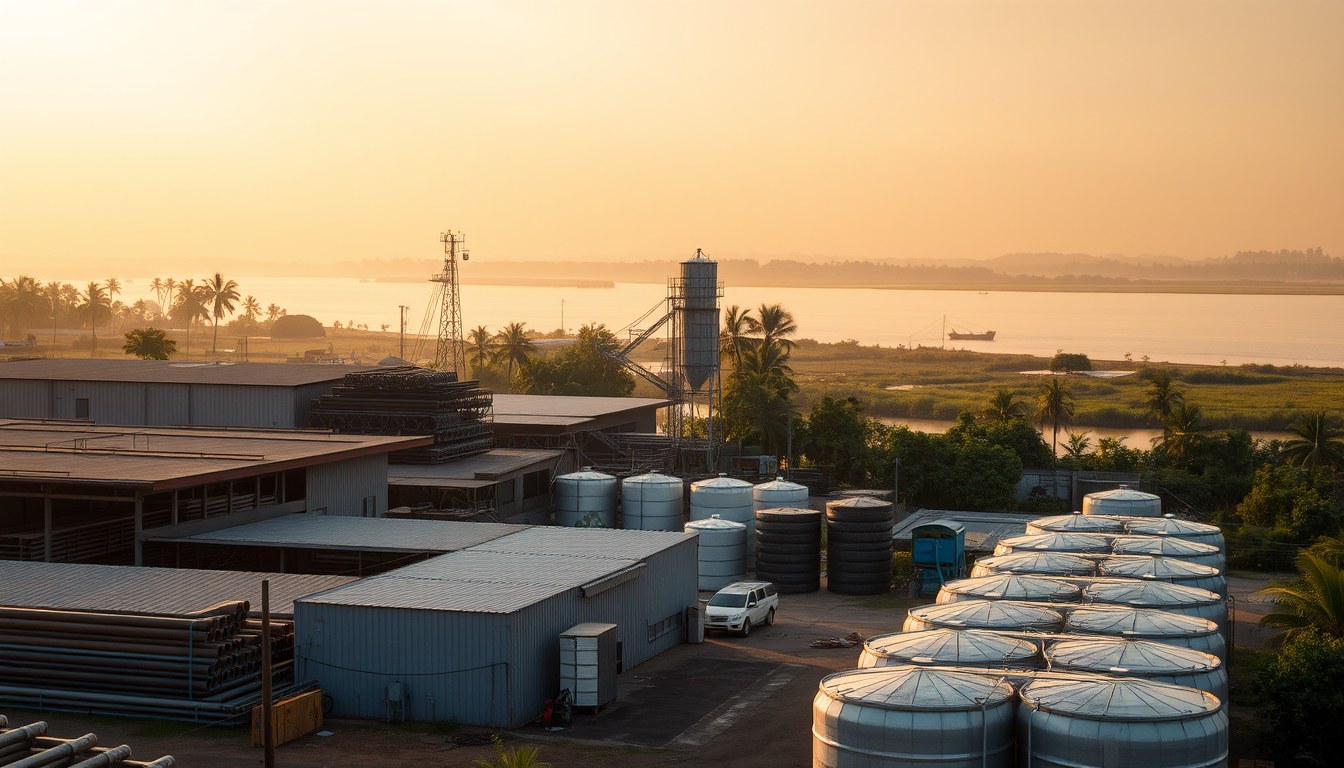
The local paragraph is short. Halliburton says it worked with local suppliers to upgrade its liquid mud and cement plant in Suriname, and supported construction of what it calls the country’s first completions and drilling workshop, with advanced maintenance and repair capabilities. It adds that it will prioritise local talent and local suppliers.
Where small firms realistically fit
Read from a supplier’s perspective, those two items say a great deal. A tier-1 service company does not hand its downhole tools or well design to a newcomer. What it does need, on the ground, is the physical base that keeps offshore work running: plants, workshops, yards and the people who build and maintain them. Halliburton does not list the trades involved, but onshore facilities of this kind typically draw on:
- Construction and civil works: foundations, buildings, drainage and site preparation.
- Fabrication and mechanical trades: steelwork, piping, tanks and installation support.
- Electrical and instrumentation: power, controls and upkeep of plant equipment.
- Facility services: logistics, warehousing, security, cleaning, catering and transport around the base.
The common thread is that these are scopes a Paramaribo firm can price, staff and insure. The barrier is less technical than procedural: safety records, certifications, documented quality systems and the ability to invoice, and wait for payment, on a multinational’s terms.
What the announcement leaves out
The silences matter as much as the claims. Neither Halliburton nor the trade coverage names a single Surinamese supplier, says what the plant upgrade or workshop cost, or quantifies local hiring. “Prioritise” is not a target. For an entrepreneur deciding whether to invest in certification or equipment, that means the business case must be built on conversations rather than numbers.
The wider project is large. The Rio Times, reporting on 14 July, puts GranMorgu’s total investment at about US$10.5 billion, with an FPSO of roughly 220,000 barrels a day and first oil targeted for 2028, and cites a TotalEnergies forecast of more than 6,000 direct and indirect jobs. OilNOW likewise reports a 2028 first-oil target for the Block 58 development. Those are projections, and they describe the whole development, not Halliburton’s slice.
How to position for the next round
The practical lesson is to chase the onshore base rather than the headline. Firms that want a share of well-construction work should approach contractors’ Suriname facilities directly, document past industrial jobs, and get their safety and quality paperwork in order before a tender appears, not after. wimpel.online’s earlier guide to supplier registration remains a sensible first step.
Discovery may be improving, too. On 20 July De Snelle Pen reported on a new online platform, SurinameTenders, which bundles tenders across construction, energy, IT, agriculture, services and materials. The article does not say who operates it or how many tenders it lists, so treat it as one more channel rather than a shortcut. The contracts that matter will still be won through track record, relationships and paperwork.
Sources & further reading
- Halliburton: Halliburton wins integrated drilling and completions contract for GranMorgu, Suriname (13 July 2026)
- World Oil: Halliburton wins GranMorgu drilling contract offshore Suriname (13 July 2026)
- OilNOW: Halliburton secures integrated well construction contract for Suriname's GranMorgu project
- Offshore Engineer: Halliburton nets drilling and completions deal for TotalEnergies' GranMorgu scheme
- The Rio Times: Halliburton GranMorgu Suriname contract (14 July 2026)
- De Snelle Pen: Ondernemers krijgen nieuw hulpmiddel om zakelijke kansen te vinden (20 July 2026)
- Staatsolie Registration: A Supplier Guide 2025
- Local Content 2026: The Real Test Begins Now