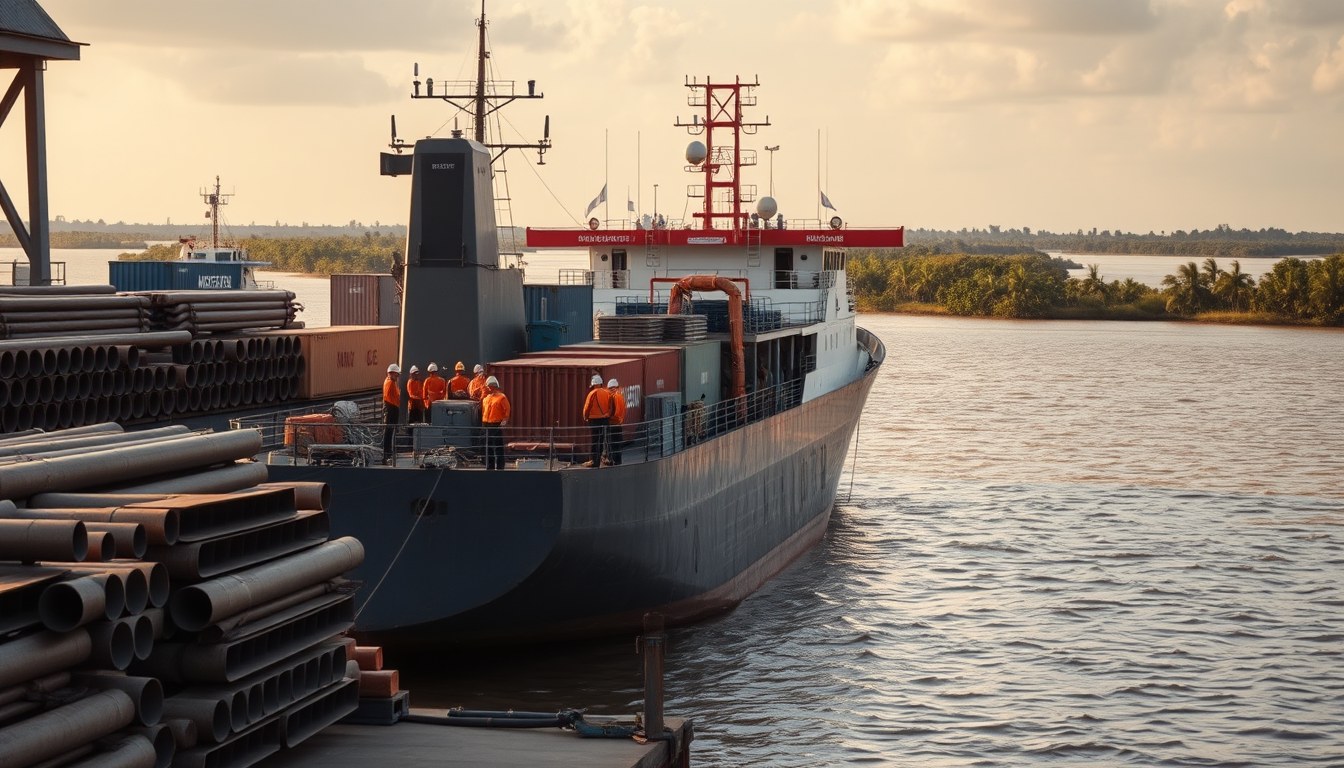
Suriname's first deepwater oil project has reached the point where it shows up in the labour market. In an interview with Radio ABC, published on 27 October and also reported by the Suriname Herald on 30 October, Artur Nunes da Silva, general manager of TotalEnergies EP Suriname, said the GranMorgu project now accounts for about 800 direct jobs (the Herald put it at more than 800). He said the employment impact was larger than first expected. Indirect and induced jobs come on top of that figure, though they are harder to count precisely.
On 4 November, next door in Georgetown, Guyana showed what a later stage looks like. At the Guyana Supplier Forum 2026, ExxonMobil Guyana said it and its contractors spent more than US$317 million with Guyanese businesses in the first half of 2026. The lesson for Suriname: once oil starts flowing, local benefit tends to be judged in procurement dollars, not only in jobs announced.
What TotalEnergies is claiming
According to the Herald report, the GranMorgu project is about halfway through its execution phase and on schedule for first oil in 2028. Drilling is due to start in early January 2027 with two rigs. Vessels to install the subsea pipelines and related systems will follow from around mid-2027. Some drilling and installation equipment is already at logistics bases in Suriname. The FPSO is being built in China, with fitting-out and testing at three shipyards, and is scheduled to sail for Suriname in early 2028.
The government has given a slightly different timetable. At a press briefing reported by the Herald on 22 October, Minister of Oil, Gas and Environment Patrick Brunings said the first production drilling would start in December and that the project was about 43 percent complete. The two accounts may refer to different milestones, but the exact start date of drilling is not yet settled in public statements.
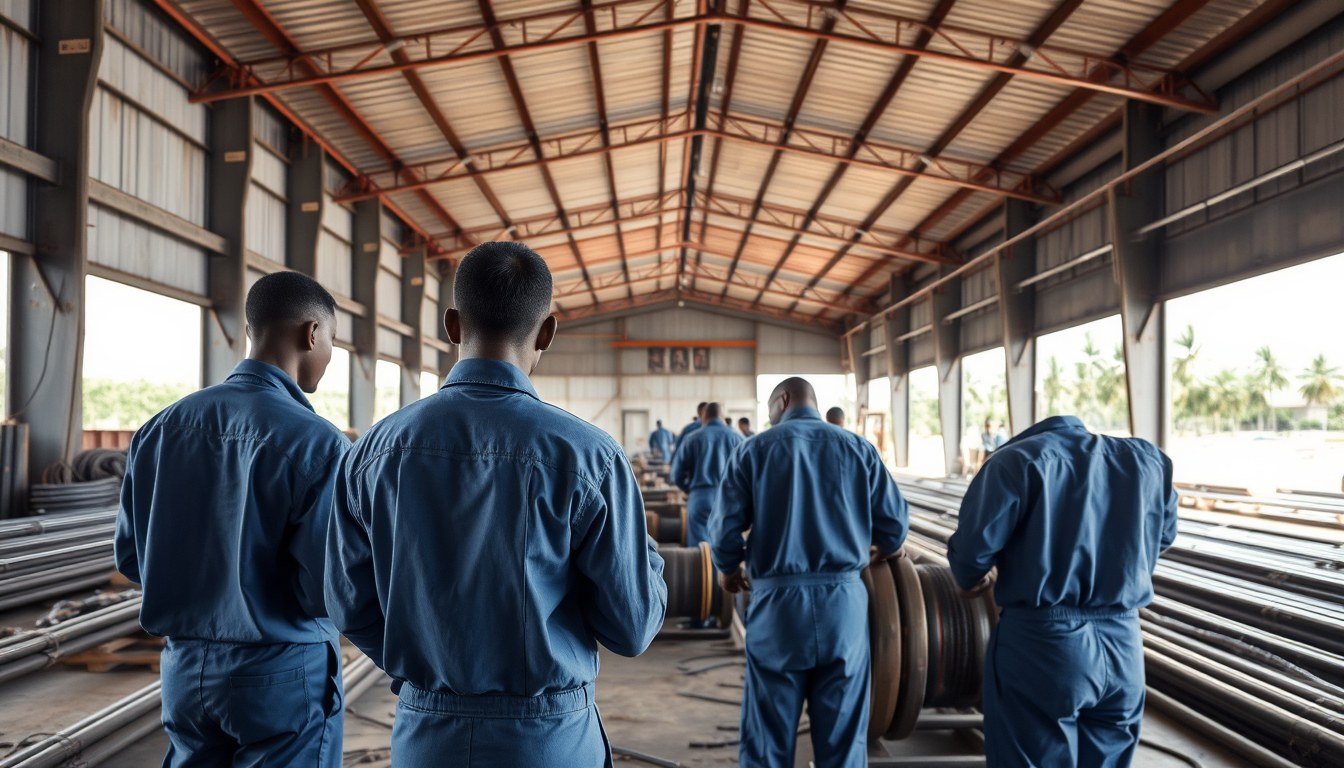
Da Silva gave three reasons why job numbers beat expectations: more Surinamese meet the job requirements, more work can be done locally, and more Surinamese firms have proved able to contribute. He also gave a number that is useful for judging those claims. About 150 foreign employees currently work within TotalEnergies EP Suriname itself. Other companies involved in the project employ foreign staff as well, but he did not give a number.
That missing number is the weak spot. A total of about 800 direct jobs with no breakdown by nationality, employer or skill level shows that activity is happening. It does not show how much of the project's value stays in Suriname. Data points so far are partial: Minister Brunings said in October that nearly 70 percent of subcontractor Halliburton's staff in Suriname are Surinamese. In wimpel.online's assessment, the higher-value parts of the coming offshore campaign, such as engineering, supervision and specialist marine work, are the areas where international service companies are most likely to dominate, which is why a project-wide breakdown matters.
The Guyana benchmark
Guyana's operator now reports local supplier spending in US dollars. At the 4 November forum, ExxonMobil Guyana's Lorna Carlson said more than 150 contracts had gone to local businesses over the past year. She said more than 2,000 Guyanese businesses were involved in the oil and gas sector and that spending with Guyanese suppliers had passed US$3.9 billion since operations began in 2019. Spending in 2025 alone approached US$700 million. As a simple check, doubling the first-half 2026 figure would give roughly US$634 million, somewhat below the 2025 level, though second-half spending need not match the first half. Carlson also said Guyanese now make up 70 percent of the workforce supporting operations and project activities, according to Guyana Times.
The more pointed comments came from Michael Munroe, director of Guyana's Local Content Secretariat. He urged operators to give early guidance on upcoming procurement, to structure RFIs and RFQs around what local firms can already do, and to process invoices and payments faster so that suppliers have working capital. On badly packaged tenders he said: "if you package it wrongly, then you indirectly are creating an artificial barrier." Guyana's Local Content Act, enacted in December 2021, currently covers 40 categories of work. Consultations have identified 20 additional areas, which Munroe said are under review by the government.
Suriname's supplier pipeline
A central supplier-development effort in Suriname is Staatsolie's Blue Wave Supplier Development Program, supported by Chevron, QatarEnergy, TotalEnergies and PetroChina. It certified 57 companies from its third edition on 3 December 2025, and Staatsolie said 115 companies had been trained across four cohorts by then. The six-month programme prepares small and medium-sized firms for the quality and safety standards that international operators require. That is a sensible place to start, but a certificate does not guarantee a contract.
The real test comes in 2027. Drilling, subsea installation and more marine logistics will bring a large volume of procurement in a short period. Suppliers that are ready by then can grow with the project. Those that are not may see the work go to established regional and international firms.
What to watch
- Spend, not headcount. Will TotalEnergies and Staatsolie publish figures for local procurement on GranMorgu in US dollars, as ExxonMobil does in Guyana?
- Contractor workforce data. Without nationality figures across the contractor chain, the 800-job figure and the 150-expat figure cannot be compared on the same basis.
- Tender packaging for the 2027 campaign. Munroe's point about scoping work around local capability applies directly to GranMorgu's drilling and subsea contracts.
- Payment terms. Faster invoice processing, which Munroe singled out, matters a great deal to small Surinamese firms that are short of working capital.
The roughly 800 jobs are a credible start. Guyana's experience suggests that, over time, governments and voters judge an oil project on how much of its spending stays in the country. With drilling due to begin within weeks or a few months, Suriname has little time left to set up the reporting that would let it make that judgement.
Sources & further reading
- Radio ABC: GranMorgu-project levert nu al 800 directe banen op (27 October 2026)
- Suriname Herald: GranMorgu-project op schema, eerste olie in 2028 blijft haalbaar (30 October 2026)
- Suriname Herald: Eerste olieboringen GranMorgu starten in december (22 October 2026)
- OilNOW: Oil companies spent US$317 million with Guyanese businesses in first half of 2026 (4 November 2026)
- OilNOW: Munroe tells oil companies to invest in Guyanese suppliers beyond awarding contracts (4 November 2026)
- Guyana Times: O&G opportunities being carved out for small, women-owned businesses (5 November 2026)
- Staatsolie: 57 Surinamese companies certified through Blue Wave Program (8 December 2025)