
Since 17 August, Surinamese exporters have been working under a rewritten foreign-exchange regime. Under Algemene Beschikking no. 228 of the Deviezencommissie, the foreign-exchange commission, export proceeds must be brought home and at least 35% of them sold for Surinamese dollars. For gold, that share now goes straight to the Centrale Bank van Suriname (CBvS). For everything else, it goes through the commercial banks.
The 35% figure itself is not new. A retention scheme of the same size was introduced in 2022, when Keynews reported that exporters called it a bitter pill. Beschikking 228 replaces the decisions behind that scheme and changes the plumbing, most visibly for gold. The rule is aimed at the country's chronic shortage of hard currency. But its sharpest edge cuts somewhere less obvious: the local manufacturer that exports part of its output and imports much of what it needs to make it. For that firm, the rule amounts to a compulsory round-trip through the SRD.
What the beschikking actually requires
According to Starnieuws, the decision is dated 31 July 2026 and was taken after consultation with the president, the minister of Finance and Planning and the CBvS governor. It took effect on 17 August. The mechanics are as follows:
- Gold: exporters must offer at least 35% of their foreign-currency export proceeds to the CBvS, which converts them into SRD at the bank's weighted average rate. The sale runs through the forex bank where the proceeds were repatriated.
- Other goods, services and values: a 35% retention requirement applies, with the currency sold through Suriname's commercial forex banks. At most 65% of proceeds may be credited to the exporter's account.
- Speed: the Vereniging Surinaams Bedrijfsleven (VSB), the main business association, notes that the 35% must be sold within three working days.
- Proof: exporters must show in writing each month that they have complied, no later than 14 days after the month ends.
- Sanction: the Deviezencommissie may revoke permits for non-compliance, including permits for the movement of goods. The CBvS may issue further guidelines.
The decision also cancels three earlier Deviezencommissie decisions, from July 2022, September 2022 and February 2023, and amends parts of Algemene Beschikking no. 221 of 3 March 2021.
The round-trip problem
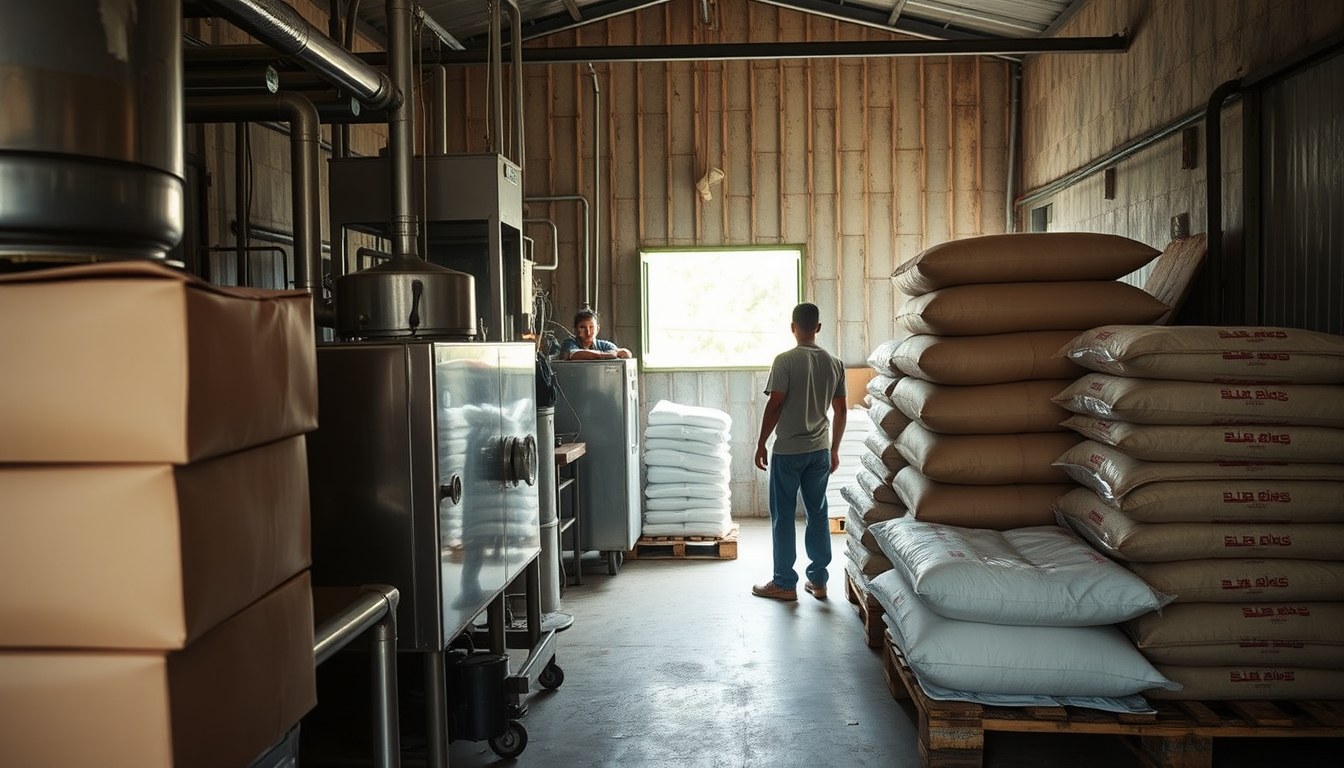
For a pure exporter whose costs are mostly local, such as wages, rent and local inputs, selling 35% of dollar earnings for SRD costs little. It needs the SRD anyway. The trouble starts with firms whose inputs are priced in dollars.
Take a hypothetical producer that earns US$100,000 from a regional shipment. It must sell at least US$35,000 for SRD within three working days. If its next order of raw materials, packaging or spare parts must be paid in dollars, it has to go back to the market and buy foreign currency again. It pays the spread twice, takes on exchange-rate risk in between, and depends on dollars actually being available when it needs them.
That is the core of the VSB's objection. In a statement reported on 22 August, the association warned that the rule could slow the growth of local manufacturers that must sell foreign currency and later buy it back to import raw materials, packaging, machinery, parts and capital goods. It said producers of food, hygiene products and other consumer goods would be hit hardest, citing extra costs, uncertainty and possible production delays. It also argued that investment in new machinery, capacity and export development could become harder.
The compliance burden
The monthly proof requirement deserves as much attention as the percentage. In practice, every export receipt needs a documented trail: when it was repatriated, through which bank, and when and at what rate the 35% was sold. For large exporters with finance teams, this is routine. For a mid-sized family manufacturer, it is another monthly filing deadline, with goods-movement permits at stake if the paperwork is late or incomplete.
The practical advice is unglamorous. Route export receipts through a single forex bank, reconcile each repatriation against its conversion, and keep a monthly file that can be handed to the Deviezencommissie without reconstruction. For firms without that discipline, the rule is a genuine operational risk.
The exemption the VSB wants
The VSB accepts that the economy needs enough foreign currency. Its argument is about who should carry the burden. On 21 November 2025, it proposed exempting producers that earn less than 60% of their total turnover from exports. These are firms that mainly serve the domestic market and, according to the association, support jobs, import substitution and diversification. That proposal predates beschikking 228, and the new decision does not appear to include such an exemption.
The logic has merit. A firm that sells mostly at home already earns SRD and buys dollars for its imports. Forcing it to convert the dollars it does earn abroad mostly adds friction. A plausible counter-argument is that any exemption based on turnover invites gaming and makes enforcement harder. Gold, where the CBvS is now a direct buyer, is clearly a focus of the new decision, and it matters for the balance of payments: the IMF's most recent Article IV review observed that mining output had weakened despite record gold prices.
As of late August, the beschikking stands as written. For exporting manufacturers, the immediate task is to restructure treasury, invoicing and import timing so the round-trip costs as little as possible, whatever comes of the lobbying.
Sources & further reading
- Starnieuws: Nieuwe retentieregeling: 35% goudexportopbrengsten rechtstreeks naar CBvS (17 August 2026)
- Starnieuws: VSB: Verplichte verkoop exportdeviezen remt lokale productie (22 August 2026)
- Keynews: Groenten exporteurs niet blij met retentieregeling (4 October 2022)
- IMF: Suriname 2025 Article IV Consultation (February 2026)
- Stop Blaming Banks: Fix Your Paper Trail First
- Why Suriname's Banks Are Not Ready for Oil