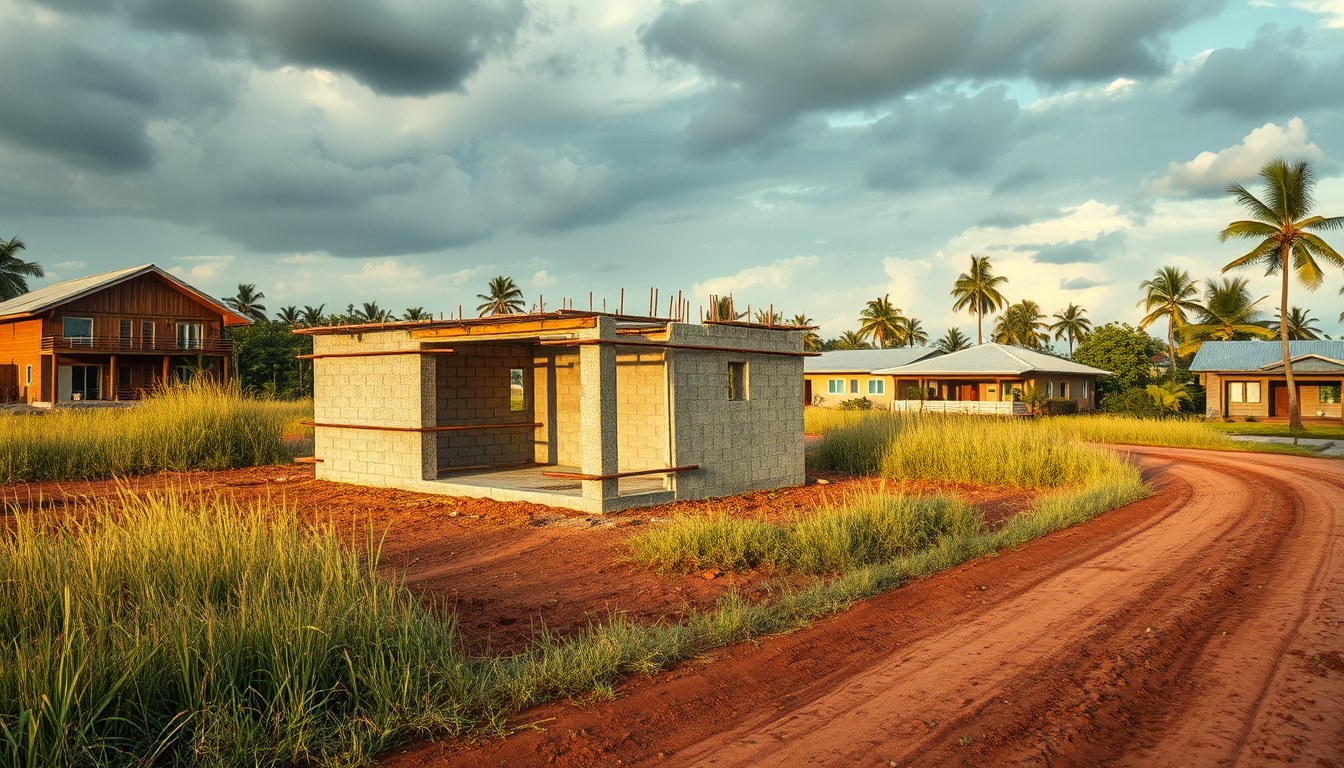
Suriname does not lack land. It lacks houses built on it. That gap was stated plainly in September 2026, when Defence Minister Uraiqit Ramsaran said that soldiers and other Defence staff feel short-changed: some had paid money towards government-arranged homes that were never built, and some never even received a bereidverklaring, the letter of intent that starts the process. His conclusion, as reported by Suriname Herald, was blunt: a plot on its own is no solution, because many civil servants do not have the money to build.
He asked the Ministry of Land Policy and Forest Management (GBB) to look beyond handing out plots and at how homes can actually be built. Some staff, he noted, received land years ago and still have not built on it. That is the land-to-home gap in miniature.
Land papers are not enough collateral
Much residential land in Suriname is not owned outright but held on grondhuur, a state ground lease. Under official norms published in 2022, terms run from 15 to 40 years, according to The Rio Times. A lease that can lapse is a weaker asset to borrow against than freehold, and borrowing is already expensive. The US State Department's 2026 Investment Climate Statement says mortgages and liens are common, but that "interest rates are generally uncompetitively high, deterring many businesses from seeking credit in the local market."
The same report notes that mortgages are registered with the Mortgage Office, that the share of land lacking title is unknown, and that non-residents can lease state land only through a company set up under Surinamese law, in a process it calls lengthy. It also records that Suriname is the only country in South America that does not recognise the collective land rights of Indigenous and Tribal communities. For a household with lease papers and a modest salary, the likely result is a plot that does not easily turn into a construction loan.
The conversion that stopped
The previous government's answer was to let leaseholders buy their plots. Under the land-conversion decree of 31 October 2023, Suriname Herald reported, 15,794 applications had been approved and processed by 9 July 2025, bringing SRD 659.5 million into the treasury. On 9 August 2025 the GBB minister halted further implementation on President Jennifer Simons's instruction. Opposition MP Ameerani Jarbandhan has argued that the abrupt stop may conflict with principles of good governance. The Rio Times reported that applicants were still waiting in late August 2026.
The effect: one route from lease to bankable title has been closed for more than a year, with no legislated replacement.
A reform announced, not enacted
On 10 July 2026, at a handover of land documents in Nickerie, President Simons set out what she wants instead, according to the government, which said legislation was being prepared. Land would be issued for a stated purpose. Transfers and extensions would be registered directly via a notary and the Dienst der Domeinen, rather than waiting on a minister's signature. Ground leases would no longer lapse after 40 years where a house stands on the plot, and land left unused would automatically revert to the state. "We moeten die grondhuurtitel versterken," she said: the lease title must be strengthened.
That direction would help lenders and owners. But as of late September 2026 it remained, in The Rio Times' assessment, an announcement rather than a law. Until legislation is published, banks must price today's title, not tomorrow's.
What the market is pricing
The scale of the gap shows up in asking prices. RE/MAX listings viewed by The Rio Times on 27 September 2026 included a three-bedroom, 175 m² house in south Paramaribo at €90,000 and a five-bedroom, 315 m² house in north Paramaribo at €345,000, while a 689 m² building plot in north Paramaribo was offered at €40,000. These are asking prices, not transaction prices. On top come stamp duty of 4%, MI-GLIS registration of about 0.6% and notary fees of up to about 3%, according to the same report. With the Surinamese dollar at about SRD 37.4 to the US dollar on 25 September, euro-denominated prices are a long way from what a typical public-sector salary can finance.
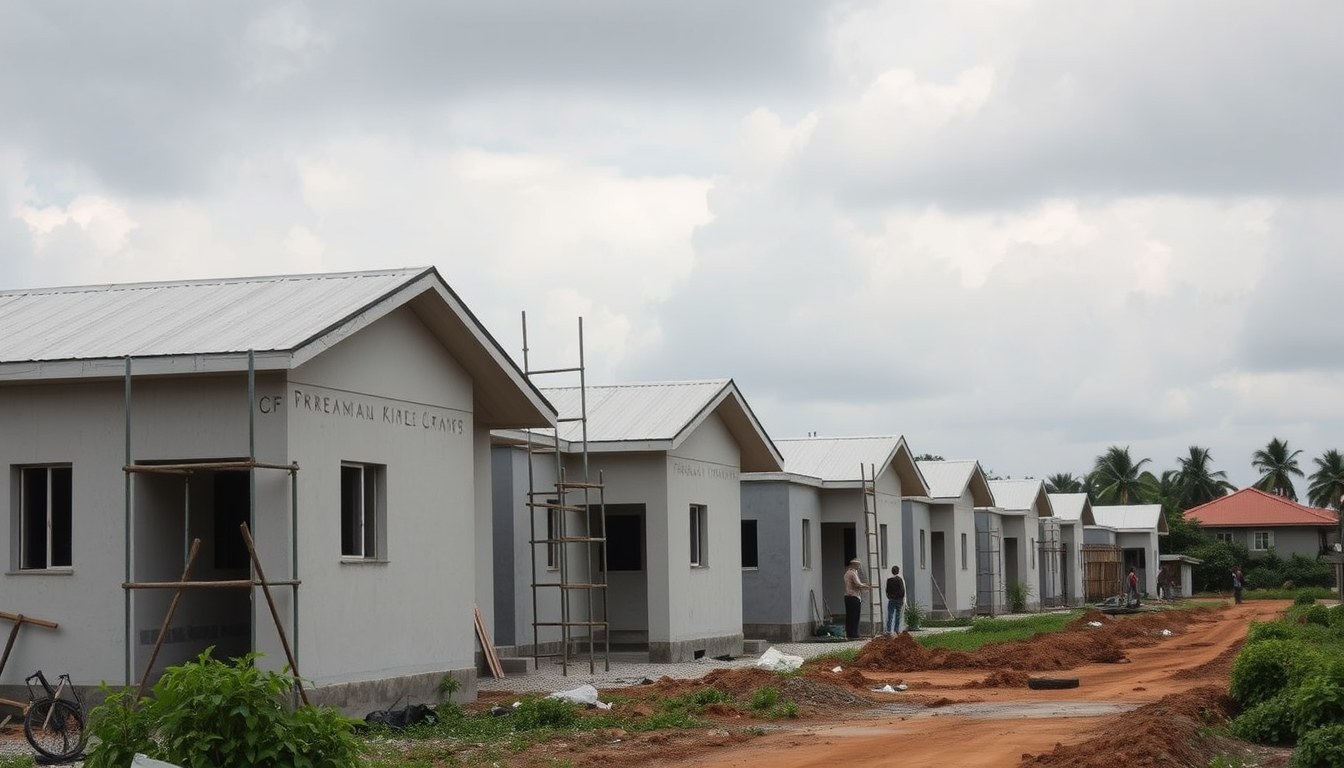
The state is building, but slowly. On the Koela site at Fredrikshoop and Pontbuiten, the first 19 government homes were nearing completion, Suriname Herald reported on 22 September; contractor Franko Whu expected to finish in about a month and a few weeks. Stichting Volkshuisvesting Suriname will manage the units, and an independent commission will allocate them, with the aim of housing financially vulnerable families. Nineteen homes is a start, not a supply response.
What would close the gap
- Legislate the title reform. A lease that does not lapse under a house is a lease a bank can more readily lend against.
- Decide on conversion. Restart, redesign or replace it, but end the limbo.
- Finance construction, not just plots. As Mr Ramsaran's complaint shows, land without a building loan is a promise deferred.
Until those pieces move together, Suriname's land supply will stay on paper, and its housing shortage on the ground.
Sources & further reading
- Suriname Herald: Ramsaran: militairen voelen zich tekortgedaan na uitblijven beloofde woningen (7 Sep 2026)
- Government of Suriname: Minister Uraiqit Ramsaran (Defensie) brengt werkbezoek aan Regio West
- Suriname Herald: Eerste 19 woningen op Koela-terrein naderen oplevering (22 Sep 2026)
- US Department of State: 2026 Suriname Investment Climate Statement
- Suriname Herald: Jarbandhan bevraagt president Simons over stopzetting grondconversie (9 Jan 2026)
- Government of Suriname: Gronduitgiftebeleid behoeft noodzakelijke hervorming (10 Jul 2026)
- The Rio Times: Buying property in Suriname as a foreigner (27 Sep 2026)
- Suriname Property Law Every Owner Must Know
- Financing Suriname Property: A 2025 Rental Guide