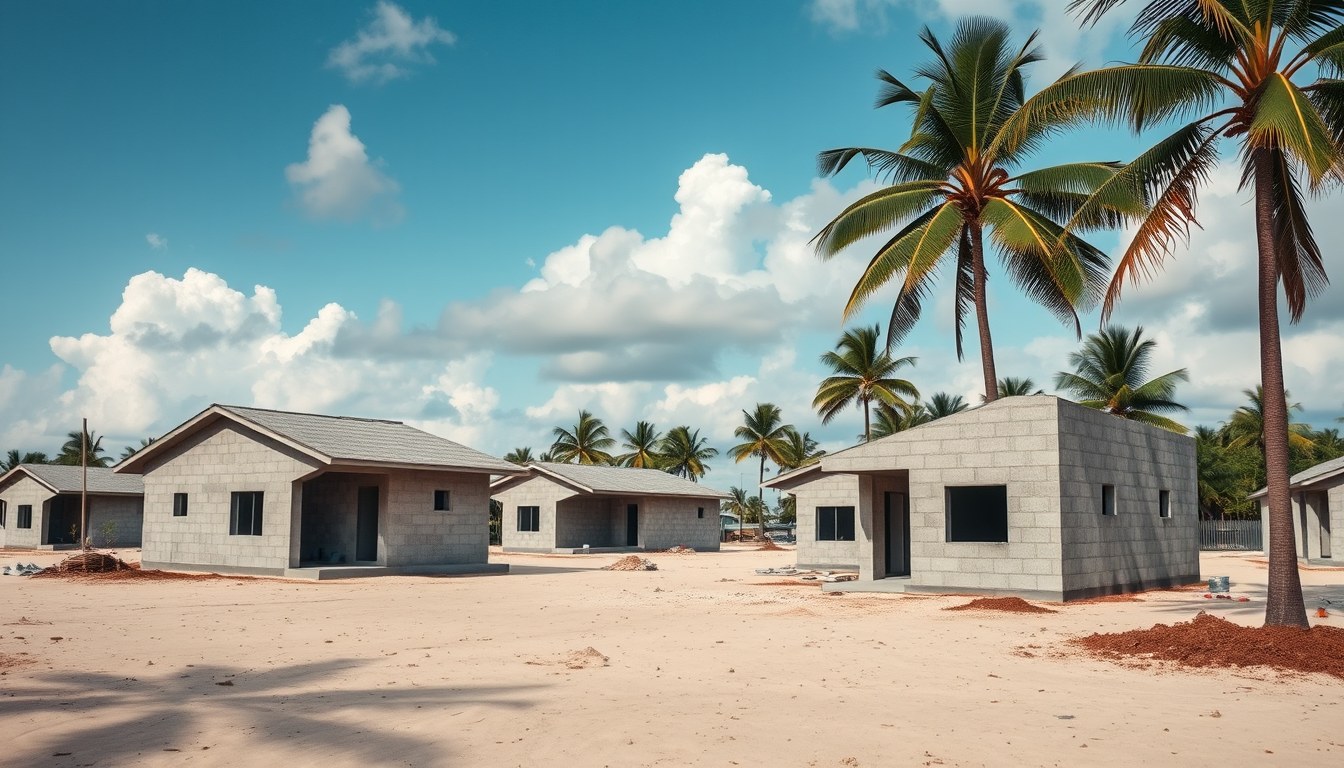
Six weeks ago, on 12 October, President Jennifer Simons and Minister of Public Works and Spatial Planning Stephen Tsang gave the start signal for 350 social homes at Reeberg, in Wanica. China is paying for them. For a government that has made housing a headline promise, it is a welcome and visible start. It is also a useful measure of how far there is to go.
What was started
The 350 units are a donation from China. According to Suriname Herald, they are meant for socially vulnerable households and must be completed within two years. The contractor then remains responsible for maintenance for a further two years.
The project is not new. de Ware Tijd reports that China made the commitment in 2017, and that it stalled because of circumstances in Suriname. Tsang said the location changed often between 2019 and 2025, each time requiring fresh research and preparation. When the current government took office, the remaining budget would have covered only 248 homes. The number was restored to 350, linked to 50 years of diplomatic relations. The minister could not say how much the donor will invest.
Donated does not mean free to the occupant. Government adviser Faizal Abdoelgafoer told the newspaper that the homes will be sold, not handed out. Recipients had not yet been determined. He said he would argue for people without a fixed job, such as market vendors and taxi drivers.
The size of the gap
At the July launch of the National Housing Programme Suriname (NaHuSur), the Minister of Social Affairs and Housing put the number of households needing suitable housing at about 30,000, GFC Nieuws reported. The President's stated aim is 10,000 homes within four years.
Our arithmetic puts that in proportion. Ten thousand homes in four years means an average of 2,500 a year, and would still cover only about a third of the stated need. The 350 donated homes equal 3.5% of the target and just over 1% of the 30,000 households.
The wider Reeberg development, begun in 2019, is meant eventually to provide about 3,500 housing solutions. In July, roughly half the infrastructure was complete. The same report listed 150 homes under the Affordable Housing Project, 27 model homes and a later 67-home phase at Reeberg, along with apartments and facilities, plus 150 homes planned this year in Voorburg and 55 in the Koela project at Pontbuiten. These are project counts at different stages, not a tally of completed houses.
Finance is the second bottleneck
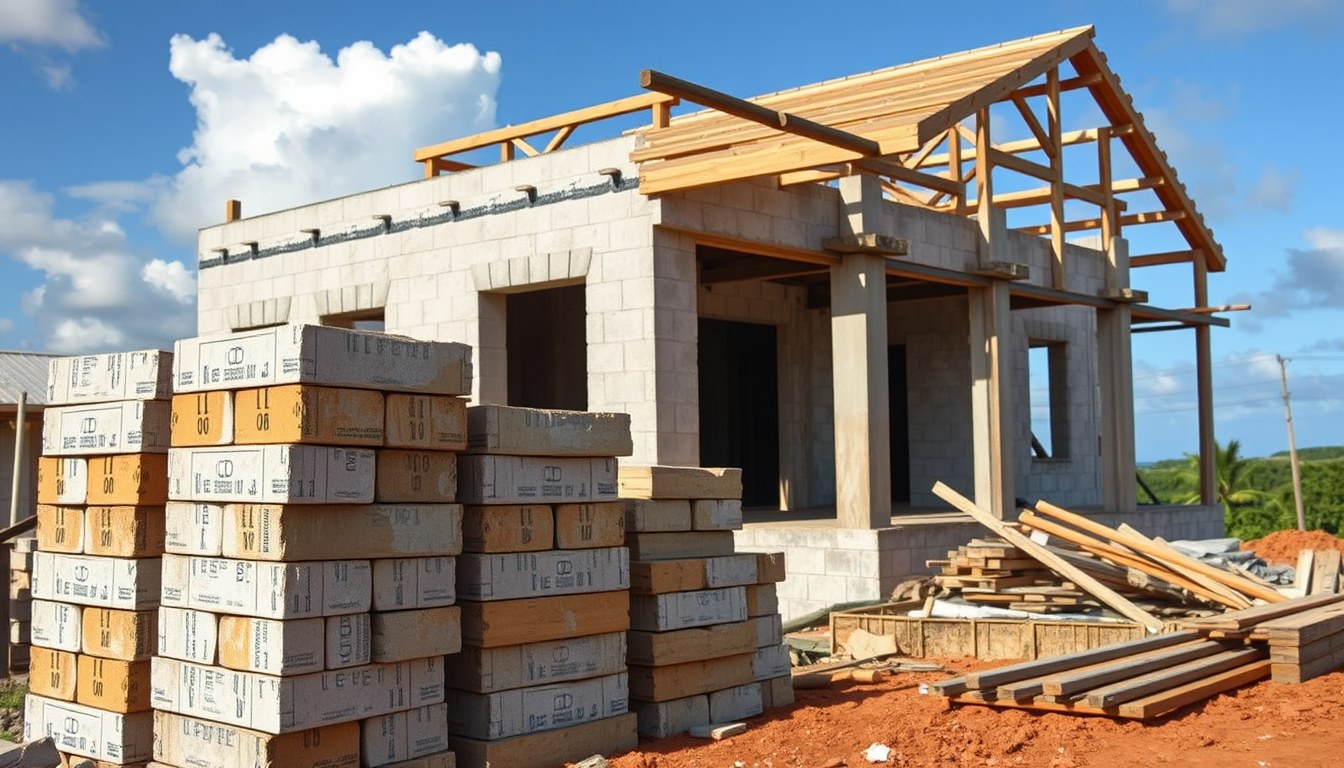
A house that is sold needs a buyer who can pay. The government has reserved SRD 250 million for the National Housing Construction Fund in 2026, and Simons has pointed to financing at interest rates of 3, 5 and 7%, Suriname Herald reported. Mortgages and subsidies are to run through local banks for buying, building or renovating. GFC Nieuws reports that applicants must be adults, hold Surinamese nationality and own no other property.
The reports we reviewed do not set out loan sizes, repayment periods or which income level gets which rate. Those details decide who can actually buy. The government is also preparing land and providing electricity, water, internet and access roads to limit costs to residents.
Building costs matter too. The preliminary construction price index rose 1.8% in the third quarter and stood 3% higher than a year earlier, according to Dagblad De West. That is far slower than the 15.2% annual rise recorded a year before, but prices are still going up. The index measures the cost of construction, not what homes sell for.
Why oil raises the stakes
First oil from the offshore GranMorgu project is planned for 2028. The government has said it wants to stop oil development from putting homes beyond ordinary households. As GFC Nieuws noted in October, more investment need not mean higher home prices if new building and the reuse of vacant homes add enough supply. It also noted that there is no public Surinamese data that can precisely measure how investment affects house prices.
That is a serious blind spot. Without regular figures on sales prices, rents and completions, policymakers and lenders may learn of an affordability problem mainly through complaints.
What to watch, and who is affected
The first test is close. The 27 model homes at Reeberg were due to be delivered in November, de Ware Tijd reported in October. As of 23 November, the sources we reviewed did not confirm that they had been finished.
- Households: ask for the allocation criteria and full loan terms, not only the headline rate.
- Banks: they are the delivery channel, so their assessment of irregular incomes will shape who gets in.
- Builders and suppliers: a 10,000-home aim implies a steady pipeline only if sites, utilities and finance arrive together.
- Government: a public count of homes started, completed and occupied would show progress better than another launch.
The Chinese donation promises real homes on a fixed timetable. It does not by itself create the repeatable system of serviced land, affordable credit and construction capacity that a shortage of this size requires.
Sources & further reading
- Suriname Herald: launch of the 350 homes (13 October 2026, Dutch)
- de Ware Tijd: project history and sale of the homes (14 October 2026, Dutch)
- GFC Nieuws: NaHuSur launch and housing figures (9 July 2026, Dutch)
- GFC Nieuws: oil and housing affordability (7 October 2026, Dutch)
- Dagblad De West: third-quarter construction price index (3 November 2026, Dutch)