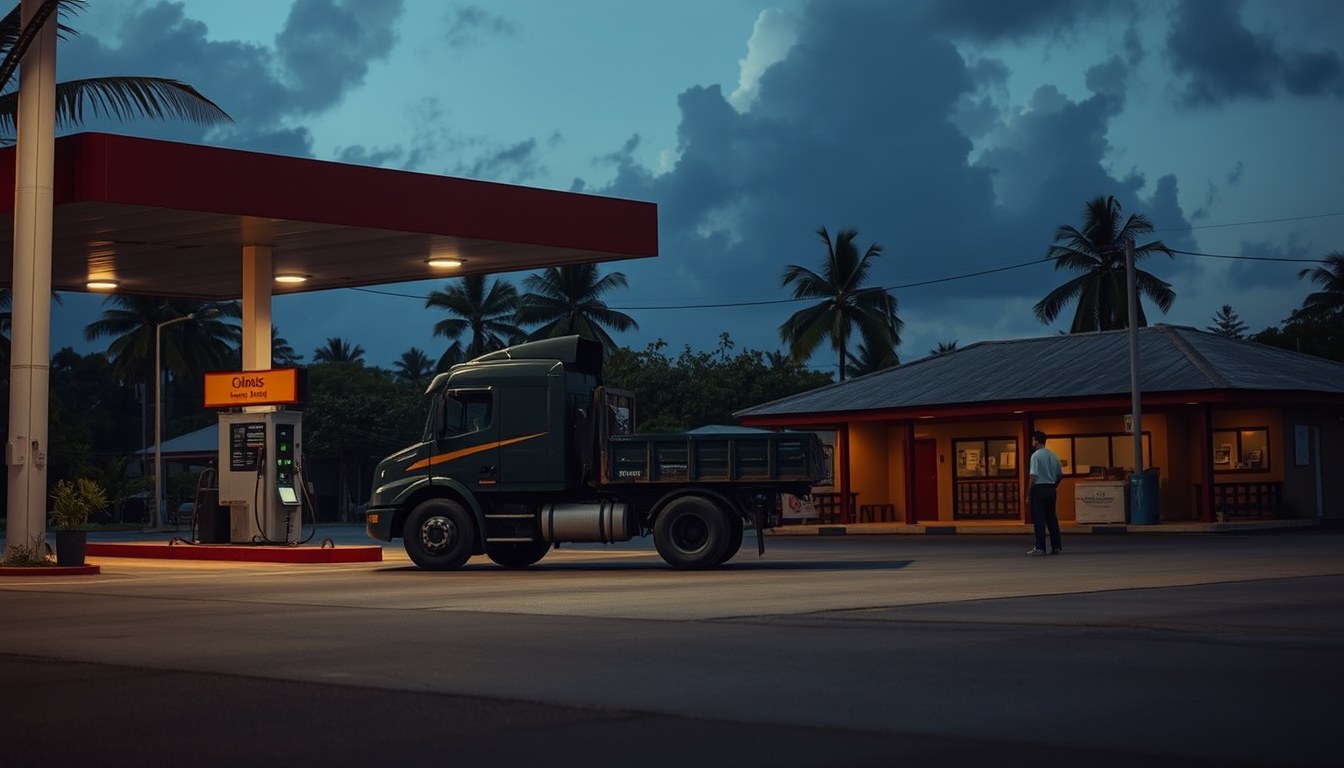
Brent crude closed at USD 112.68 a barrel on Thursday 22 October, its highest level in about five months, according to the Suriname Herald. The Guardian reported the same day that Brent had passed USD 112 for the first time since 18 May, after new attacks in Saudi Arabia and on shipping in and around the Gulf. A day earlier it had closed at USD 108.82. A country that pumps its own oil and runs its own refinery might expect to do well out of that. In Paramaribo, it is a fiscal headache.
Speaking on the programme Bakana Tori, in remarks reported by the Suriname Herald on 22 October, President Jennifer Simons spelled out what the pump price really means: "Dus bij elke liter die u tankt, betaalt de overheid een deel voor u." (So with every litre you buy, the government pays part of it for you.) Then came the line that matters for every business plan in the country: "We gaan het niet kunnen blijven doen." (We will not be able to keep doing this.) No date has been announced for adjusting or lifting the cap.
A cap built for a short war
The cap is not new. Key News reported that President Simons approved it on 17 March 2026 and that it applied to fuel loads from 18 March. The government confirmed that it covers all new cargoes from 18 March. Diesel was fixed at SRD 53.27 a litre and unleaded at SRD 48.32. Super unleaded was excluded. When international prices push pump prices above those levels, the state covers the difference out of what the arrangement calls the "Government Take". The stated reason was the war in the Middle East.
Officials warned early on that the cap had limits. In late March, Edgar Dikan, coordinator of the presidential Crisis Management Team, told the Communicatie Dienst Suriname that the cap was needed but could not be sustained indefinitely. He said that once the gap grows larger than the Government Take, the state itself has to pay: "Als het gat groter wordt dan de governmenttake, ga je als overheid zelf moeten betalen."
Seven months on, the pressure on supply has not eased. On 21 October, Patrick Brunings, Minister of Oil, Gas and Environment, spoke to reporters before the Council of Ministers. ABC Suriname reported that he called the cap increasingly hard to maintain, while saying the government would try to keep it "zo lang mogelijk" (for as long as possible). He said the Strait of Hormuz was still closed and that an alternative route that had briefly carried Middle East crude was no longer available. Diesel, he added, stays expensive because there are few substitutes for it.
The size of the gap
The Suriname Herald published market prices as of 13 October. Without the cap, diesel would cost SRD 74.52 at SOL, SRD 74.76 at GOw2 and SRD 69.00 at Rubis. Unleaded would cost SRD 64.66, SRD 58.99 and SRD 60.96 respectively. Depending on the company, the gap reaches SRD 21.49 a litre for diesel and SRD 16.34 for unleaded.
In other words, lifting the cap at the highest quoted prices would raise diesel by roughly 40% and unleaded by about a third overnight. A 50-litre diesel fill-up that costs SRD 2,663.50 today would cost SRD 3,738 at the GOw2 market price. That is an extra SRD 1,074.50 every time.
That is why the government hesitates. Simons said the cap was introduced because the state judged that citizens could not absorb the inflation at that moment. Diesel moves trucks, generators, fishing boats and farm machinery. Any pass-through is likely to show up in freight rates, food prices and the cost of every service that depends on haulage.
The refiner's paradox
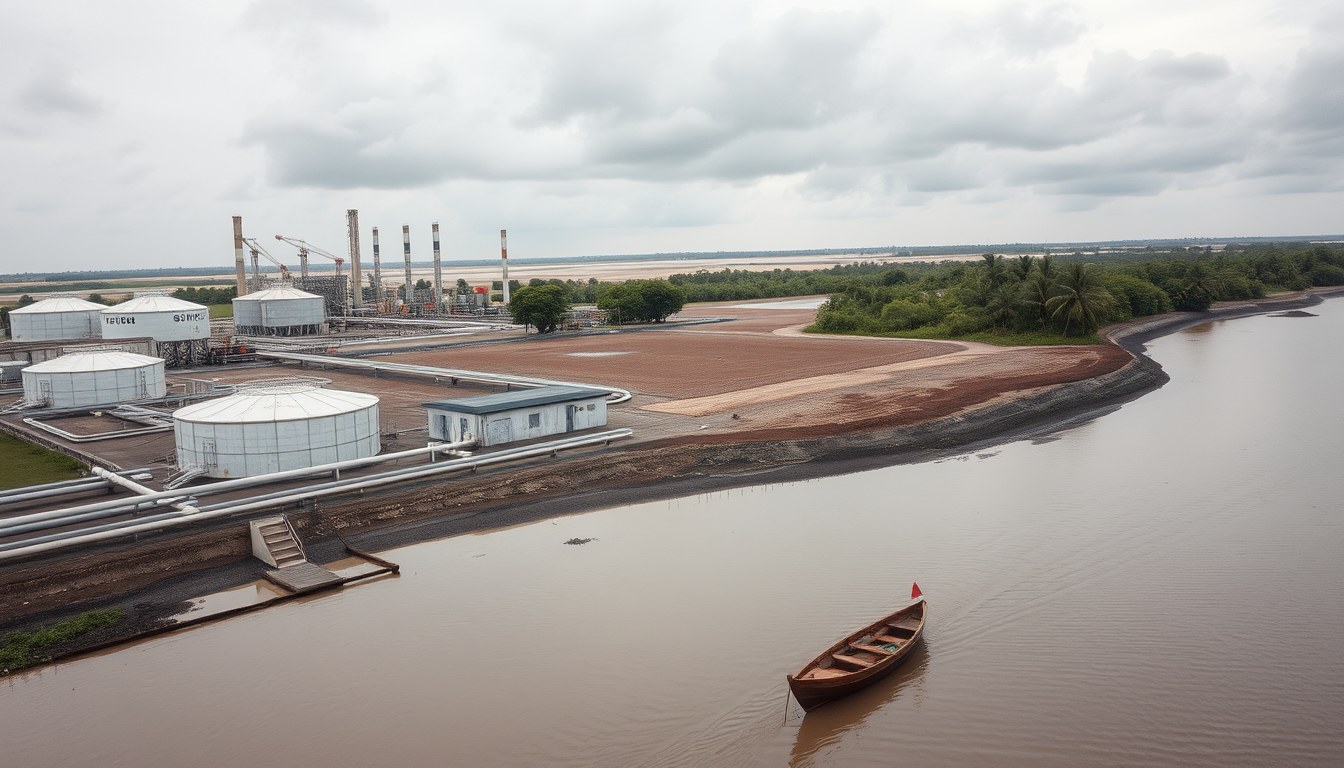
Here is the awkward part. Suriname is not simply an importer at the mercy of the market. According to Staatsolie, its refinery produced 3.15 million barrels of diesel and gasoline in 2025, up from 2.9 million in 2024. Its subsidiary GOw2 sells fuel at the pump. Even so, GOw2 had the highest uncapped diesel price of the three companies quoted on 13 October. According to the government, GOw2 also raised its pump prices to the capped level when the cap took effect in March, ending the price advantage it had held over the other oil companies.
The likely explanation is market-linked pricing. Locally refined fuel is sold at prices that track international levels, so a high Brent price lifts Staatsolie's revenue even as the Treasury pays to hold pump prices down. In August, BEP member of parliament Ronny Asabina made this point in the National Assembly. Waterkant reported that he argued Staatsolie benefits because it sells its locally produced fuel at the same high international prices. He asked the government to disclose how much the company earns from the international oil price. According to Dagblad De West, he asked for a full financial picture rather than only the cost of the fuel subsidy, saying the state is not, on balance, making a loss.
The state is, in effect, on both sides of the trade. Staatsolie and its subsidiaries earned USD 832 million in revenue in 2025 and contributed USD 400 million to the state in taxes, dividends and royalties, about 30% of government revenue. Energy Magazine reported the same figures. Higher fuel margins can partly flow back to the budget that funds the cap. Brunings described the limits more cautiously. The Suriname Herald reported that he said domestic production gives some room to cushion international shocks but does not fully remove the pressure on price policy.
Why GranMorgu does not solve this yet
The structural fix sits offshore. In September, Staatsolie said that TotalEnergies' GranMorgu development in Block 58 is progressing according to schedule and that "first oil is planned for 2028". Until then, the state's oil income rests on onshore production and refining, and the fuel subsidy competes with every other claim on the budget.
For businesses, the message of 22 October is clear enough. The cap is temporary, no end date has been set, and the president has said the state cannot keep paying. In August, De West reported that the government intended to phase the cap out gradually, though no timetable has been published. Transport operators, distributors and anyone with a diesel-heavy cost base would be prudent to price contracts on the assumption that pump prices will move towards market levels, possibly in steps. When the cap goes, and how quickly, is still unknown.
Sources & further reading
- Suriname Herald: Simons: brandstof kan fors duurder worden (22 Oct 2026)
- The Guardian: Oil prices jump to five-month high as attacks threaten global supply (22 Oct 2026)
- Suriname Herald: Brandstofprijsplafond steeds moeilijker te handhaven (21 Oct 2026)
- ABC Suriname: Handhaving prijsplafond op brandstof steeds moeilijker (21 Oct 2026)
- Culturu: Hoge olieprijzen zetten brandstofprijsplafond onder druk (22 Oct 2026)
- Key News: Regering houdt brandstofprijzen voorlopig stabiel met price cap-regeling (18 Mar 2026)
- GOV.SR: Price cap brandstof nodig, maar niet onbeperkt houdbaar (25 Mar 2026)
- Waterkant: Asabina over hoge olieprijs en Staatsolie (29 Aug 2026)
- Dagblad De West: Asabina wil duidelijkheid over Staatsolie-inkomsten en afbouw brandstofcap (27 Aug 2026)
- Staatsolie: 2025 financial statements approved (May 2026)
- Energy Magazine: Staatsolie posts strong 2025 results (18 May 2026)
- Staatsolie: TotalEnergies CEO visit underscores progress on GranMorgu (21 Sep 2026)
- Staatsolie H1 2026: Record Revenue Momentum
- Steel in the Water: GranMorgu Goes Offshore Now