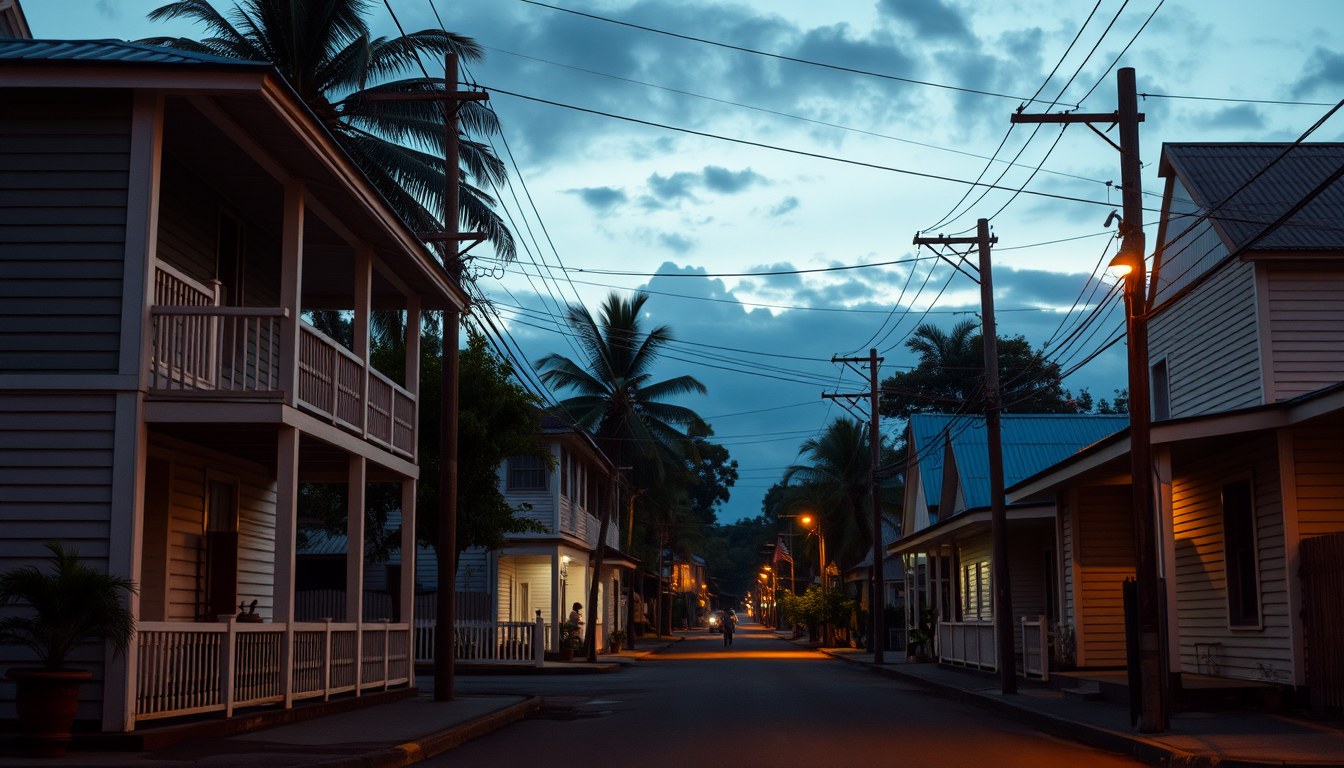
On 25 August, Energiebedrijven Suriname (EBS) announced rotating power cuts across the EPAR grid, which covers Paramaribo, Para, Wanica, Commewijne and Saramacca. Each outage lasts at least three hours. The utility said consumption had risen faster than expected during the dry season and that it had no reserve capacity left (Waterkant).
The timing is awkward. Petronas's Block 52 offshore now counts eight successful wells and more than one billion barrels of oil equivalent, according to an OilNOW recap at the end of August (OilNOW via Brazil Energy Insight). Suriname is planning an export-scale gas project while rationing electricity at home.
A shortfall measured in megawatts and years
On 30 August, Anand Kalpoe, director of the Energie Autoriteit Suriname (EAS), told Radio ABC that the shortfall is about 60–80 MW (Suriname Herald). He put last year's peak load at about 230–240 MW and expects a peak of about 280 MW this year, an increase of roughly 17–22 per cent in one year. The last expansion of generating capacity dates from around 2020. Kalpoe said any new capacity will need at least one to two years before it can be used; renting temporary generation is possible but expensive.
Kalpoe cited years of under-investment and demand that has outrun supply, driven by rising domestic consumption and expected development in the oil and gas sector. In other words, the oil boom is adding to demand on the grid before it produces anything. The government has asked EBS and Staatsolie to look at expanding solar and thermal generation. Kalpoe's verdict was blunt: "Laten we er wel voor zorgen dat dit zich niet herhaalt" (let's make sure this does not happen again).
Staatsolie already runs most of the grid
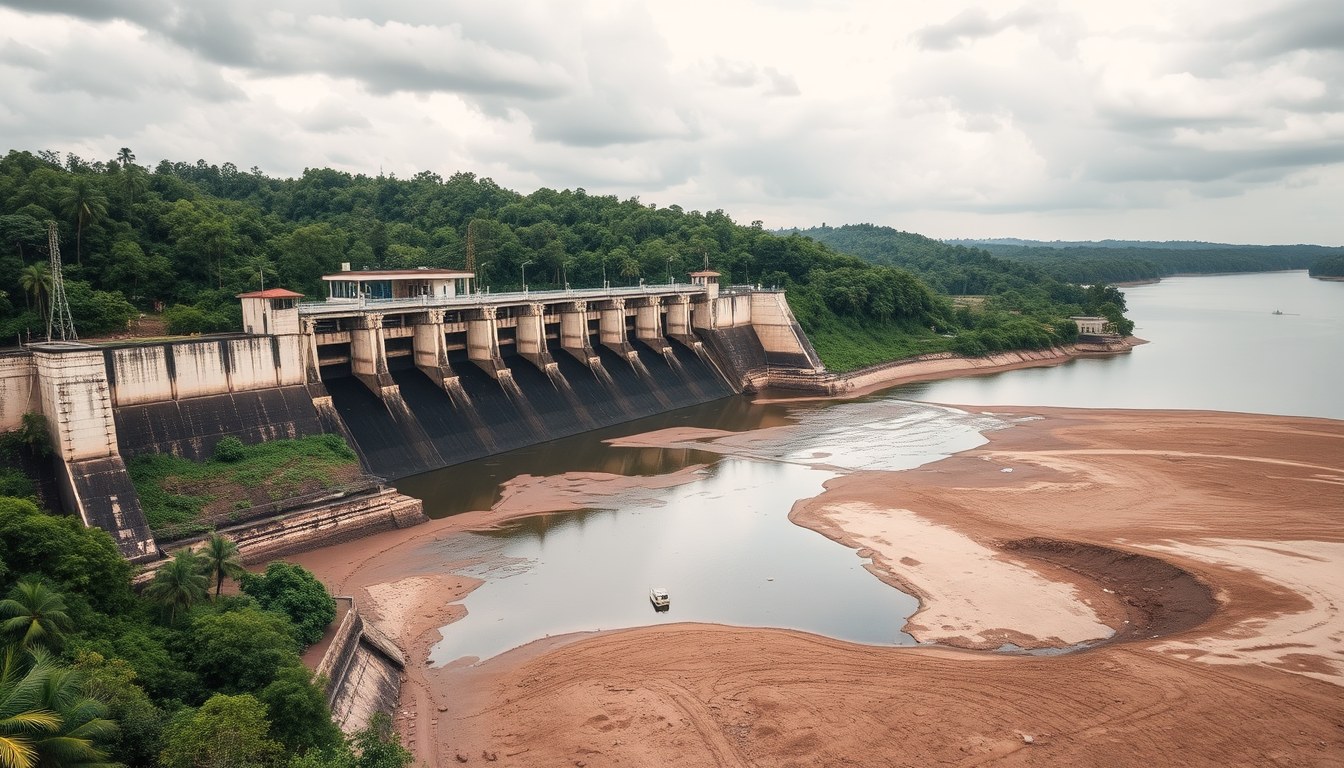
Suriname's energy security already depends heavily on the state oil company. Its subsidiary, Staatsolie Power Company Suriname (SPCS), operates two plants (Staatsolie). The larger is the 189 MW Afobaka hydro dam, which SPCS took over in 2020 and which meets at least 42 per cent of EPAR demand. The other is the 96 MW Tout Lui Faut thermal plant, which burns heavy fuel oil and meets about 25 per cent. Together the two supply 65–75 per cent of the electricity needs of Greater Paramaribo and the surrounding districts.
This mix is weak in exactly the conditions Suriname now faces. Kalpoe noted that hydro output can fall in the dry season while consumption rises. The thermal back-up burns oil products. Neither plant uses natural gas, the fuel Suriname has now found offshore in commercial quantities.
The gas clock: FID in 2026, first gas in 2030
Staatsolie approved the Sloanea-1 commercial field in Block 52 on 11 November 2025 (Staatsolie). The partners are Petronas, the operator with 80 per cent, and Paradise Oil Company, a Staatsolie subsidiary, with 20 per cent. The development concept consists of gas wells, subsea infrastructure and a floating LNG facility, which Staatsolie calls a first for the region. Petronas must first submit a development plan for Staatsolie's approval; at the time, the final investment decision (FID) was planned for the second half of 2026 and first gas for 2030. Petronas's upstream chief, Mohd Jukris Abdul Wahab, was reported in early August as saying the Block 52 FID is planned before the end of 2026 (oilprice.com via Brazil Energy Insight).
Two points stand out. First, the concept as published is about LNG: Staatsolie's announcement does not mention domestic gas or power generation. Second, even if everything goes to plan, gas is not expected before 2030. In May, Staatsolie managing director Annand Jagesar told Reuters he hoped for a declaration of commerciality on oil in Block 52 within about 18 months (OE Digital), which would widen export ambitions rather than grid supply.
What the FID should settle, and what firms should do now
In wimpel.online's view, the FID is the best chance to settle a question Suriname has avoided: whether any Sloanea gas will be reserved for, or routed to, onshore power generation. Once an FLNG design and its offtake contracts are fixed, adding a domestic gas line later is likely to become harder. Policymakers who want gas-fired power after 2030 would need to raise it in the development plan now, not after the first cargo. The real issue is whether Suriname's grid in the 2030s runs on its own gas or on imported fuel oil.
For businesses, the near-term planning horizon is set by Kalpoe's one to two years, not by 2030. In practice:
- Budget for backup power. EBS has already asked firms with generators to use them at critical peak moments. Treat fuel and maintenance as operating costs.
- Shift loads. The EAS has asked users to cut consumption around midday and between 19:00 and 21:00.
- Price reliability into property and leases. In Paramaribo's oil-era housing and office market, on-site generation and solar are likely to become selling points.
- Watch the development plan. Any reference to domestic gas in it would be the clearest signal that the grid will share in the boom.
Suriname has a gas clock and a power clock, and for now they are not synchronised. The first points to 2030. The second is already running late.
Sources & further reading
- Waterkant: EBS kampt met stroomtekort, vijf districten beurtelings minimaal 3 uur zonder stroom (25 August 2026)
- Suriname Herald: Kalpoe: stroomtekort loopt op tot 80 megawatt (30 August 2026)
- Staatsolie: Staatsolie Power Company Suriname (SPCS)
- Staatsolie: Staatsolie approves commercial field for Sloanea-1 gas discovery in Block 52
- Brazil Energy Insight / oilprice.com: Suriname's oil bet is finally paying off (3 August 2026)
- Brazil Energy Insight / OilNOW: The eight wells driving Petronas Block 52 plans in Suriname (31 August 2026)
- OE Digital / Reuters: Suriname's Block 52 could become commercial in 18 months (27 May 2026)
- Sloanea Is Commercial: Suriname's Gas Act Begins
- Block 52: Petronas Crosses One Billion Barrels